What Is a Hatchet?
A hatchet is a compact chopping tool with a shorter handle than a full-size axe, making it easier to carry and control for camping, bushcraft, light wood processing, outdoor work, and collecting.
At Arham Cutlery, our Hatchets collection includes hand-forged pack hatchets, compact bushcraft designs, O1 tool-steel hatchets, 80CrV2 models, 1095 high-carbon steel designs, spike-hawk styles, and Scandinavian or Viking-inspired profiles.
Buyers who need larger chopping tools can also compare the broader selection in our Axe / Tomahawk collection.
The Arham Compact Chopping Standard
A good hatchet should not be judged only by how heavy or aggressive the head looks.
At Arham Cutlery, we consider steel type, cutting-bit geometry, head weight, handle length, balance, grip comfort, construction, sheath protection, and intended use.
We call this the Arham Compact Chopping Standard.
The goal is to combine useful chopping capability with a compact format that remains manageable for outdoor carry and controlled work.
Hatchet vs. Full-Size Axe
The biggest difference is usually size and leverage.
A full-size axe uses a longer handle that can generate more leverage during larger chopping tasks.
A hatchet uses a shorter handle, creating a more compact tool that can be easier to pack, transport, and control.
For buyers who want larger traditional axe profiles, our Viking Axes collection offers another category to compare.
Neither size is automatically better. The right choice depends on the work you expect the tool to perform.
Hatchets for Bushcraft and Camping
Compact hatchets are commonly selected for bushcraft and camping because they can provide useful chopping capability without taking up the space of a full-length axe.
Depending on head geometry and overall construction, a hatchet may suit tasks such as processing small pieces of wood, camp preparation, and general outdoor utility.
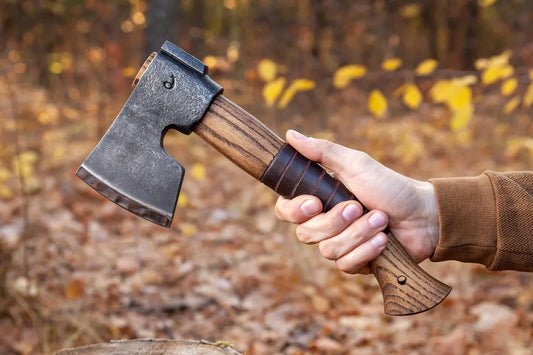
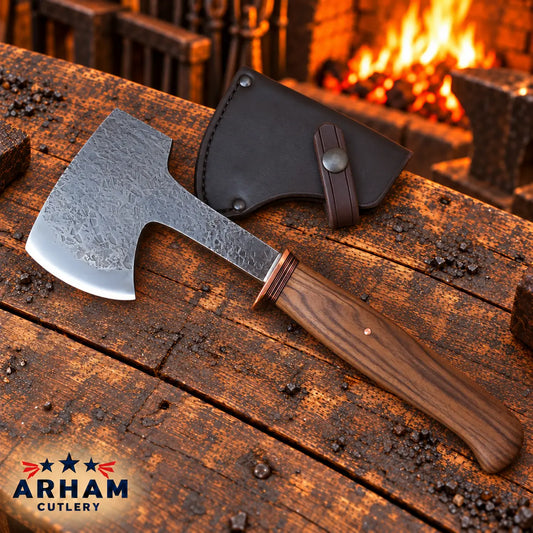
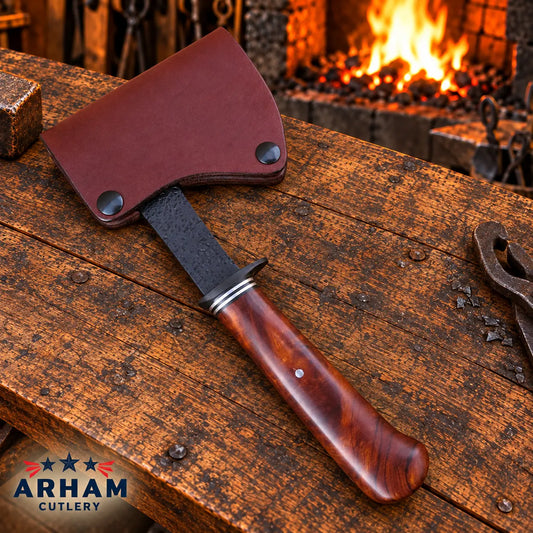
The Walnut Ridgehawk O1 Steel Pack Hatchet is a compact example measuring approximately 11.5 inches overall, with a hand-forged O1 tool-steel head and natural walnut handle.
When choosing for outdoor use, consider actual dimensions and weight rather than relying only on photographs.
O1 Tool Steel Hatchets
O1 is a high-carbon tool steel used in a variety of cutting tools.
For a handmade hatchet, steel performance also depends heavily on heat treatment, cutting geometry, head thickness, and overall construction.
The Ironburl Heritage O1 Steel Hatchet combines O1 tool steel with a desert ironwood burl handle, a compact 11.75-inch overall profile, and a custom leather sheath.
O1 should be kept clean and dry because high-carbon tool steels can develop oxidation when neglected.
80CrV2 Hatchets
80CrV2 is another steel used in forged outdoor tools and blades.
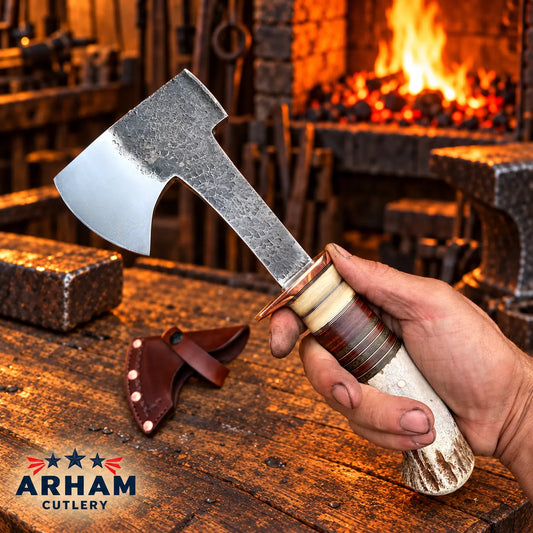
The Bighorn Trailcrest 80CrV2 Steel Hatchet uses thick hand-forged 80CrV2 steel, a flat-ground cutting profile, and a multi-material handle incorporating Micarta, natural materials, copper, and horsehide.
At approximately 12.25 inches overall, it represents the more substantial compact-hatchet side of the collection.
Steel name alone should never be the only buying factor. Heat treatment, grind, edge geometry, handle construction, and balance matter as well.
1095 High-Carbon Steel Hatchets
1095 is a widely used high-carbon steel that can be appropriate for outdoor cutting tools when properly heat treated.
Arham Cutlery also carries 1095 bushcraft and Viking-inspired hatchet designs.
The Handmade Forged 1095 High Carbon Steel Bushcraft Hatchet combines a 1095 steel head with a longer 17.5-inch overall profile and a leather sheath.
Compared with a small pack hatchet, a longer handle changes leverage, reach, carry size, and overall feel.
How Handle Length Changes a Hatchet
Handle length has a major influence on control and leverage.
A shorter handle makes the tool more compact and can provide close control.
A somewhat longer handle can create additional reach and leverage but also increases packing size.
That is why it is important to compare overall length, head dimensions, cutting-bit size, handle construction, and weight before choosing.
A hatchet intended to stay in a vehicle, workshop, or camp setup may have different ideal dimensions than one intended for compact outdoor gear.
Wood Handles
Natural wood remains one of the most traditional handle choices for axes and hatchets.
Walnut and desert ironwood burl, for example, provide distinctive grain and warm natural coloration.
The actual shape of the handle matters just as much as the material itself.
Consider grip contour, handle thickness, balance, and how the transition between the head and handle is constructed.
Natural wood should also be protected from prolonged exposure to moisture and excessive heat.
Multi-Material and Resin Handles
Not every handmade hatchet uses a conventional wood handle.
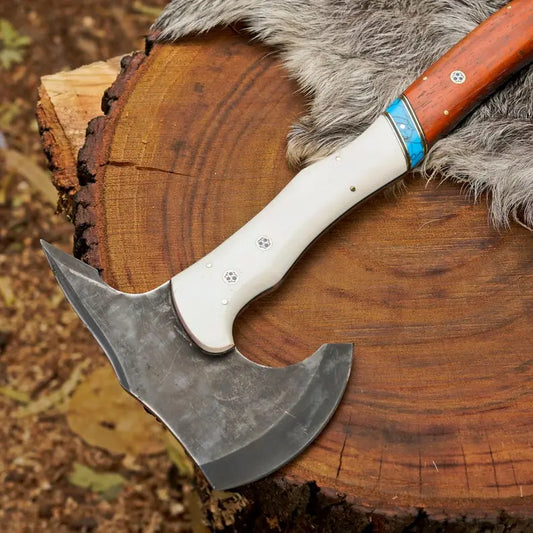
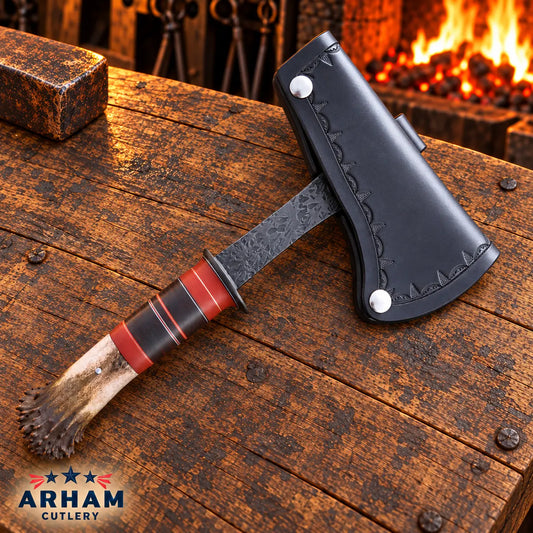
Some Arham Cutlery designs combine resin, Micarta, copper, horn, antler, leather, or other materials.
These combinations can create a more distinctive collector-oriented appearance while also changing the grip texture and weight distribution.
A 1095 bushcraft model in the collection, for example, combines resin and turquoise-style detailing with brass accents and a leather sheath.
Buyers should choose based on both appearance and grip comfort.
Cutting Bit and Head Geometry
The cutting edge of a hatchet is often called the bit.
Bit width, grind, edge thickness, and head geometry influence how the tool interacts with wood.
A broader cutting edge creates a different feel from a narrow compact bit.
For example, the Walnut Ridgehawk uses a 2.75-inch cutting bit, while the Ironburl Heritage uses an approximately 3 1/8-inch cutting bit.
These dimensional differences may seem small on paper but can noticeably affect the character of a compact tool.
Pack Hatchets
A pack hatchet is designed around portability.
For camping and bushcraft gear, a compact overall length can make the tool easier to fit alongside other outdoor equipment.
The aim is not simply to make the smallest possible hatchet. There still needs to be enough handle and head mass to create a useful, controllable tool.
This balance between portability and usable cutting geometry is an important part of the Arham Compact Chopping Standard.
Viking-Inspired Hatchets
Some buyers prefer historical or Norse-inspired styling rather than modern bushcraft aesthetics.
Compact Viking-inspired designs can incorporate broader head shapes, forged finishes, traditional styling, and leather protection.
For more designs specifically centered on this aesthetic, explore the Viking Hatchets collection.
For larger Norse-style tools, the Viking Axes collection provides another useful comparison.
Hatchet vs. Tomahawk
Hatchets and tomahawks can overlap visually, but they are not always designed around the same proportions.
A conventional hatchet generally emphasizes a compact chopping head and practical outdoor utility.
Tomahawk-style tools may use different head profiles, thinner geometry, spikes, or historical-inspired construction depending on the design.
Arham Cutlery carries both categories, so buyers interested in alternative head styles can compare them through the Axe / Tomahawk collection.
Spike-Hawk and Specialty Designs
Some compact chopping tools incorporate a rear spike or other specialty head geometry.
These designs have a noticeably different balance and appearance from a conventional flat-poll hatchet.
If you are considering one, pay close attention to overall length, head width, handle shape, weight distribution, and safe storage.
Specialty geometry should be selected because it fits your intended lawful use or collection preference—not simply because it looks more dramatic.
Leather Sheaths for Hatchets
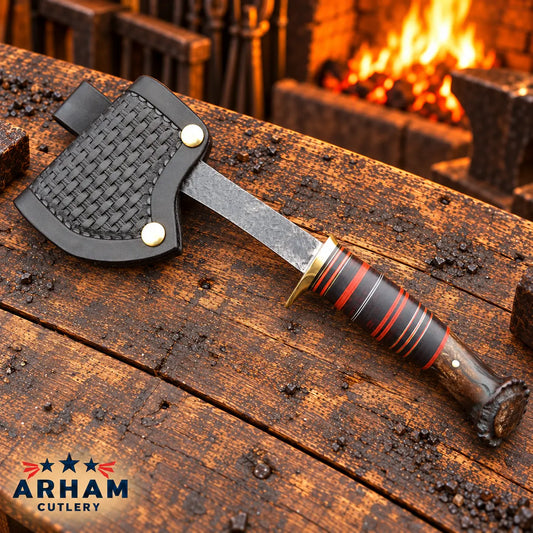
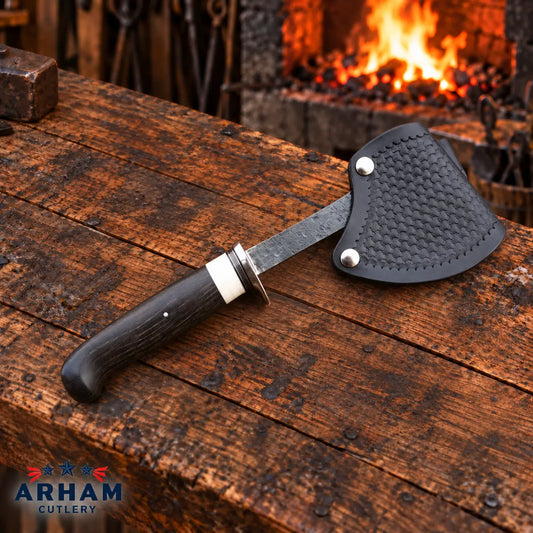
Many handmade hatchets include a protective leather sheath.
The sheath primarily protects the cutting edge during storage and transport and helps reduce accidental contact with the exposed bit.
Check the individual listing because sheath construction and coverage can vary by model.
High-carbon steels such as O1, 1095, and 80CrV2 should be completely dry before long-term storage, particularly if the tool is placed inside leather.
Hatchets for Collectors
Hand-forged hatchets can also have strong collector appeal.
Hammer marks, forced patina finishes, unusual handle materials, copper fittings, natural horn or antler accents, and handmade leatherwork can make one design very different from another.
For a collector, the decision may be driven by craftsmanship, steel finish, natural materials, or historical-inspired styling rather than outdoor use alone.
That is one reason the Hatchets collection includes designs ranging from understated walnut-handled tools to more elaborate multi-material pieces.
Viking Hammers and Other Norse Tools
Collectors building a broader Norse-inspired collection may also want to compare hatchets with other traditional-style tools.
Our Viking Hammers collection provides a different category for buyers interested in handcrafted Norse-themed pieces beyond cutting tools.
This creates a natural connection between compact hatchets, axes, hammers, and other Viking-inspired equipment without treating them as identical tools.
How to Choose the Right Hatchet
Start with the role the tool needs to fill.
For compact bushcraft or camping gear, prioritize manageable size, balance, steel, handle comfort, and sheath protection.
For a pack hatchet, examine overall length and weight carefully.
For collection use, forged finish, handle material, head design, and craftsmanship may be more important.
For a Viking-inspired piece, compare traditional styling with practical dimensions.
Before ordering, check:
overall length, cutting-bit size, steel type, steel thickness where listed, grind, handle material, head design, sheath, and intended use.
The largest or heaviest hatchet is not automatically the most useful.
Why Arham Cutlery Offers Different Hatchet Styles
One outdoor user may want a compact O1 pack hatchet with walnut.
Another may prefer 80CrV2 steel and a heavier handmade construction.
A collector may choose desert ironwood burl, copper detailing, or a forged Viking-inspired design.
That variety is the purpose of the Arham Compact Chopping Standard: matching steel, head geometry, handle length, balance, materials, and carry size so buyers can choose a hatchet according to their actual needs rather than one generic pattern.