What Are Norse Style Knives?
Norse Style Knives are modern handmade blades inspired by knife forms, materials, and visual traditions associated with the Viking Age and early medieval northern Europe. Depending on the design, they may resemble compact utility knives, long seax-style blades, broken-back profiles, or other single-edged fixed blades.
At Arham Cutlery, this collection brings together Viking knives, seax-inspired designs, Damascus blades, carbon steel blade options, wood and bone handles, brass fittings, leather sheaths, and other handcrafted details.
For buyers building a broader Norse collection, explore our Viking Swords collection or compare forged chopping tools in the Viking Axes collection.
The Arham Norse Blade Standard
A Viking-inspired knife should offer more than historical-looking decoration.
At Arham Cutlery, we consider blade profile, steel, handle construction, balance, overall length, sheath design, natural materials, and how clearly the knife expresses its intended Norse-inspired style.
We call this the Arham Norse Blade Standard.
The goal is to combine recognizable historical influence with modern handmade craftsmanship without pretending every modern knife is an exact archaeological reproduction.
What Is a Seax?
The word seax is used by archaeologists for larger single-edged knives found in early medieval contexts. Surviving examples show that seaxes were made in different proportions, including long narrow blades and shorter, broader forms. The British Museum notes that larger seaxes appear in Anglo-Saxon graves from the seventh century and that later examples included both long narrow and shorter broad types. British Museum
Modern seax-inspired knives borrow from these general blade forms but can vary considerably in steel, handle material, dimensions, decoration, and sheath design.
For a deeper look at this blade family, read our guide to Viking Seax Knives: History, Craftsmanship & Top Picks.
Long Seax Knives
A long seax uses an extended single-edged blade and creates a very different feel from a compact Viking knife.
Longer designs offer more blade presence and can appeal strongly to collectors who prefer dramatic historical-inspired proportions.
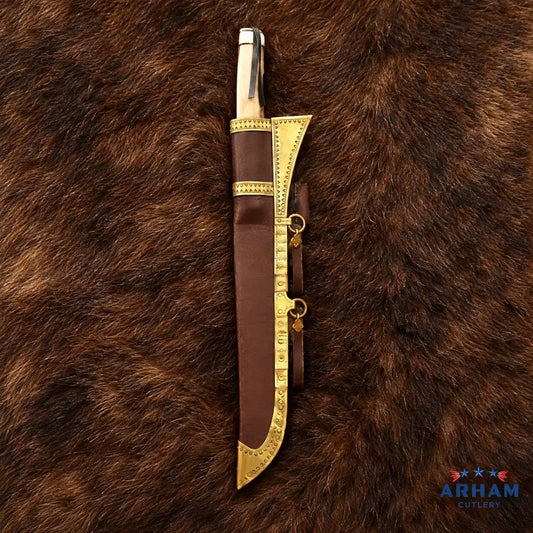
The Norsefang Longseax Viking Seax Knife is one example that combines Damascus steel with wood and bone handle materials.
When comparing long seax designs, look closely at:
blade length, overall length, blade width, tang construction, handle length, sheath, and suspension system where specified.
Compact Viking Knives
Not every Norse-inspired blade needs to be long.
Compact Viking knives can provide a smaller format while still using traditional-looking materials, fixed-blade construction, and historical-inspired profiles.
These designs may appeal to collectors who want a more manageable display or carry size.
The Gotland Viking Knife with Damascus Steel and Wood Handle is one example of a smaller Viking-inspired blade.
You can also read the dedicated article Small Blade, Real History: The Gotland Raven Viking Knife for more context around this compact style.
Raven Knife Styling
A Raven knife usually refers to a Norse-themed design that incorporates raven-inspired naming, decoration, or visual character rather than one single historical knife pattern.
Ravens are frequently used in modern Viking-themed art and knife design, which is why buyers may encounter raven motifs alongside runes, knotwork, brass fittings, dark wood, or patterned steel.
When choosing a Raven-themed knife, separate the decorative theme from the technical specifications.
Look at blade steel, dimensions, handle construction, sheath, and overall craftsmanship first.
Damascus Viking Knives
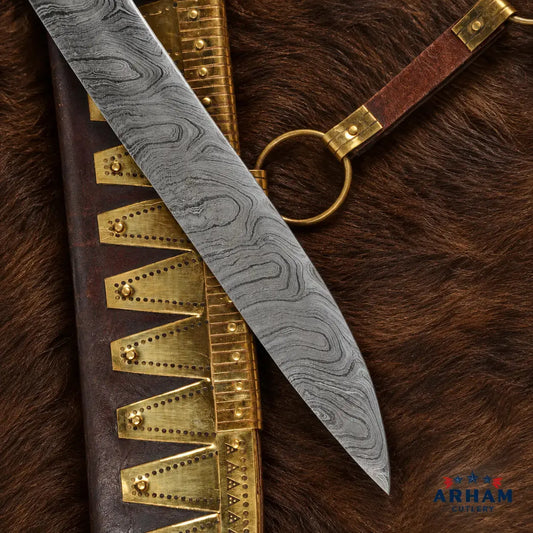
Damascus steel is especially popular in modern Norse-inspired knives because the layered pattern gives the blade a forged, handcrafted appearance.
A Damascus Viking knife can look visually striking alongside wood, bone, horn, brass, and leather.
The Birka Raven Viking Seax Knife is one example combining Damascus steel with bone and brass elements.
Damascus pattern alone should not be treated as proof of performance. Steel composition, heat treatment, blade geometry, and construction remain important.
Carbon Steel Blade Options
A carbon steel blade can suit buyers who prefer a more traditional working-steel character.
Carbon steels can take a sharp edge and develop patina with use, but they generally require more corrosion care than many stainless steels.
For Norse-inspired knives, a carbon steel blade can also complement forged finishes and simpler historical styling.
Always check the actual steel listed on the product page because not every Viking-style knife uses the same material.
Wood and Bone Handles
Wood and bone are natural fits for Norse-inspired knives because they create a handcrafted, traditional appearance.
Wood provides visible grain and warm color.
Bone adds natural variation and contrast.
Some designs combine both materials within the same handle, creating a more decorative multi-material construction.
Because these are natural materials, color, grain, and surface texture can vary from one knife to another.
Brass Fittings and Decorative Details
Brass can be used in guards, spacers, rings, pommels, or other decorative fittings depending on the knife.
Against dark wood or bone, brass creates a strong visual contrast and can make a Viking-inspired blade feel more elaborate.
Decorative fittings should still be evaluated alongside handle comfort and construction.
A knife should not be chosen only because it has more ornamentation.
Broken-Back and Angled Blade Profiles
Some seax-style knives use an angled or sharply descending back near the point.
Archaeological examples include seaxes with straight cutting edges and sharply angled backs, showing that early medieval single-edged knives existed in more than one blade form.
Modern broken-back seax designs take inspiration from this recognizable geometry.
When comparing them, look at the actual cutting-edge length, tip shape, thickness, and handle position rather than assuming every angled-back blade performs the same way.
Viking Knife vs. Seax Knife
The phrase Viking knife is broad.
It can refer to many modern knives inspired by Viking-era tools, materials, decoration, or Scandinavian styling.
A seax is a more specific historical blade category associated with single-edged knife forms.
That means many modern seax-inspired knives may be marketed as Viking knives, but not every Viking-themed knife follows a seax profile.
Understanding that distinction can help buyers compare products more accurately.
Norse Knife vs. Viking Sword
A Norse-style knife and a Viking sword may share similar decorative themes, but their scale and construction are very different.
Knives offer a compact fixed-blade format, while swords use significantly longer blades and different handling proportions.
Collectors interested in larger pieces can compare our Viking Swords collection.
This makes it easier to build a broader Norse-themed collection without treating knives and swords as interchangeable products.
Norse Knives and Viking Axes
Viking axes are another natural companion category for collectors of Norse-inspired tools.
Axes use completely different head geometry and handle construction from knives, but both categories may share materials such as wood, leather, forged steel, knotwork, or runic decoration.
Explore our Viking Axes collection for larger forged pieces.
For more compact chopping tools, compare the Viking Hatchets collection.
Viking Spears and Broader Norse Collections
Collectors sometimes prefer building a broader themed group rather than focusing only on knives.
Our Viking Spears collection adds another category of Norse-inspired forged pieces alongside knives, swords, axes, and hatchets.
This allows buyers to compare different historical-inspired forms while keeping the collection visually connected through materials and styling.
Leather Sheaths and Suspension
Many Norse-inspired knives use leather sheaths.
Depending on the design, the sheath may include belt loops, suspension rings, straps, or other carry arrangements.
Some long-seax-style designs may use multi-point suspension systems, while smaller knives can use simpler leather sheaths.
Check the individual listing because sheath construction varies significantly between products.
The sheath should be considered part of the complete knife rather than an afterthought.
Choosing the Right Blade Length
Blade length changes the character of a Norse-style knife dramatically.
A compact blade can feel easier to display, carry, and handle.
A long seax creates a more dramatic historical-inspired profile but also adds size and weight.
Before choosing, compare:
blade length, handle length, overall length, blade width, thickness, weight where listed, and sheath size.
Measurements matter more than product photography alone.
Norse Style Knives for Collectors
Collector appeal is one of the strongest reasons buyers choose Norse-inspired knives.
Damascus patterns, wood grain, bone, brass, leatherwork, runes, raven motifs, and seax profiles can make individual designs feel highly distinctive.
One collector may prefer a long Damascus seax.
Another may choose a compact Raven knife.
Another may prefer a simple carbon steel blade with understated wood construction.
There is no single correct style.
Historical Inspiration vs. Modern Construction
Modern Norse Style Knives should be understood as Viking-inspired unless the product is specifically documented as a historically accurate reproduction.
Many modern knives combine historical-looking profiles with contemporary Damascus steel, modern heat treatment, custom leatherwork, or handle combinations that should not be assumed to duplicate one specific archaeological find.
That distinction matters.
Historical inspiration can make a knife visually compelling without requiring inaccurate claims about authenticity.
How to Choose the Right Norse Style Knife
Start with the type of piece you want.
For a dramatic collector blade, compare long seax designs.
For a smaller knife, consider compact Viking or Gotland-inspired models.
For patterned steel, compare Damascus.
For simpler traditional character, look at carbon-steel options.
Then compare:
blade profile, blade length, steel, handle material, brass or other fittings, sheath style, suspension, overall size, and decorative details.
Choose the complete design rather than focusing on a single rune, raven motif, or Damascus pattern.
Why Arham Cutlery Offers Different Norse Knife Styles
There was never only one modern interpretation of the Viking knife.
One buyer may want a long Damascus seax with wood and bone.
Another may prefer a compact Gotland-style knife.
Another may be drawn to a Raven knife, brass fittings, or a straightforward carbon steel blade.
That variety is the purpose of the Arham Norse Blade Standard: bringing together blade profile, steel, natural materials, proportions, and Norse-inspired craftsmanship so collectors can choose a knife that matches the style they actually want.