Colección: Damascus Axes

Handmade Damascus Axes for Outdoor Use, Camping & Collecting

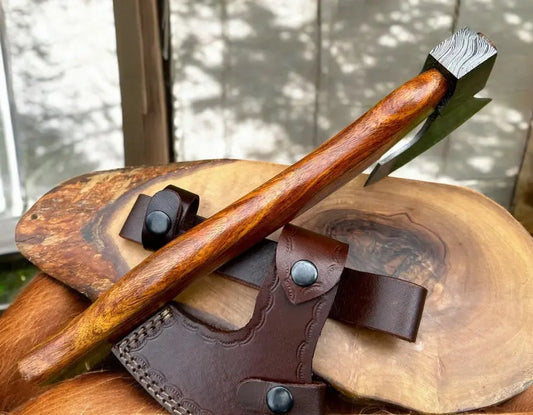
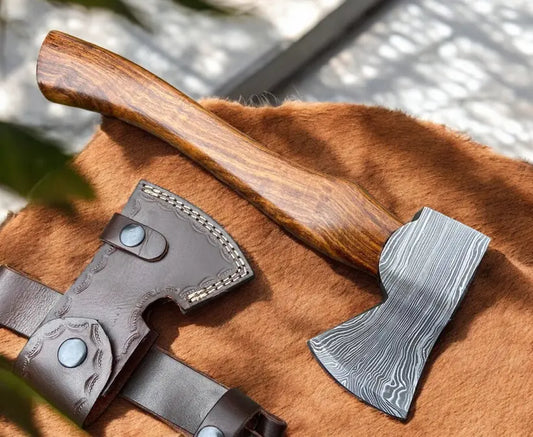
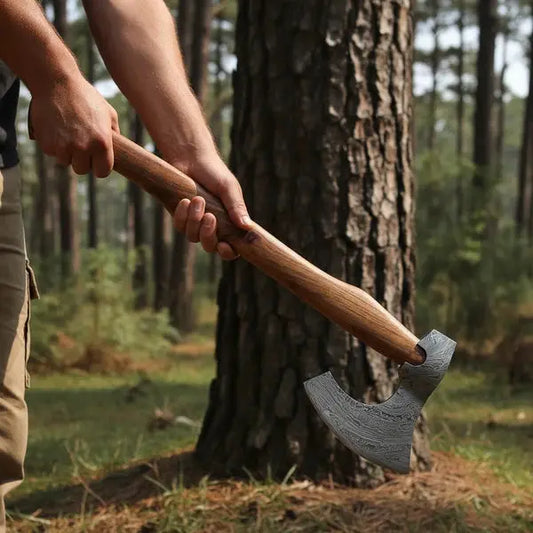
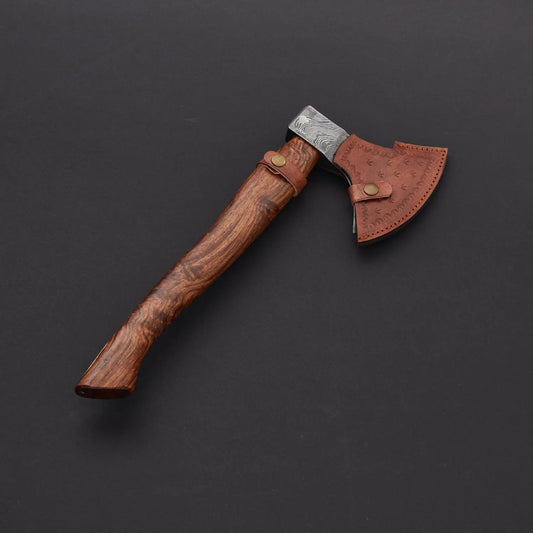
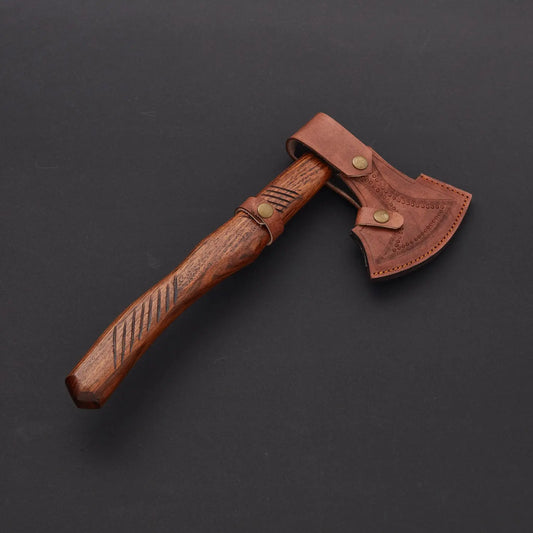
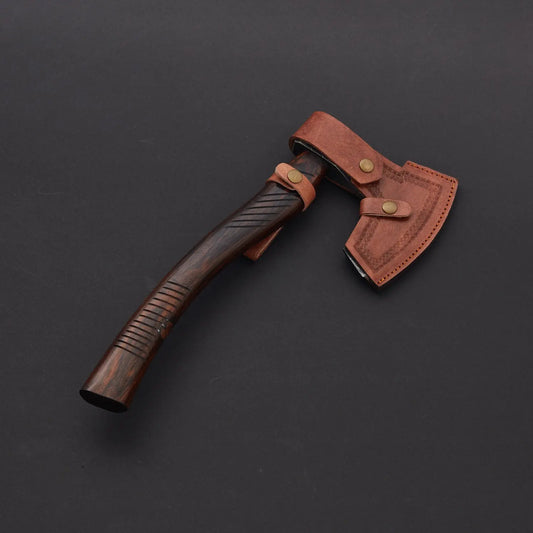
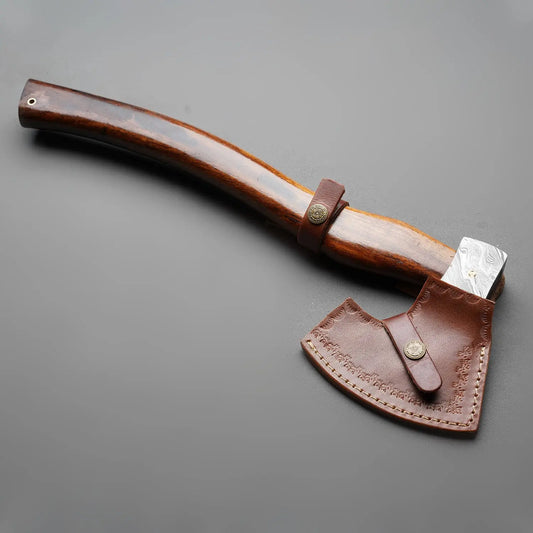
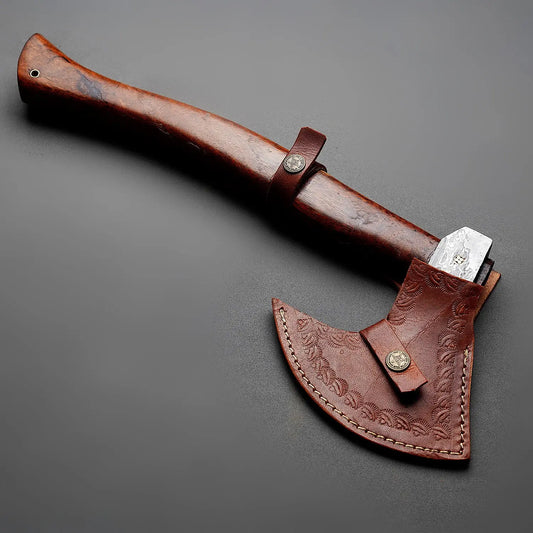
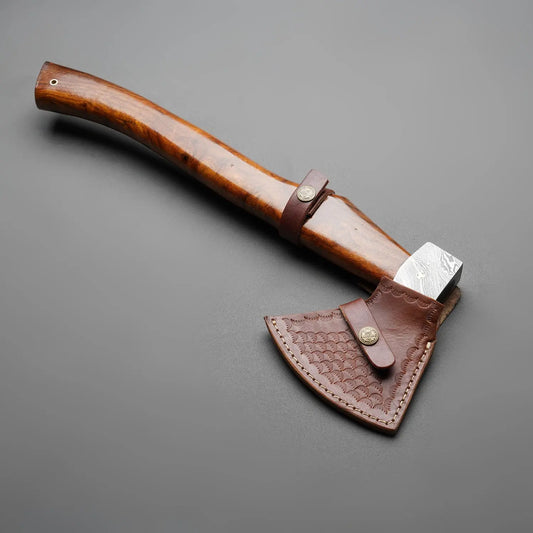
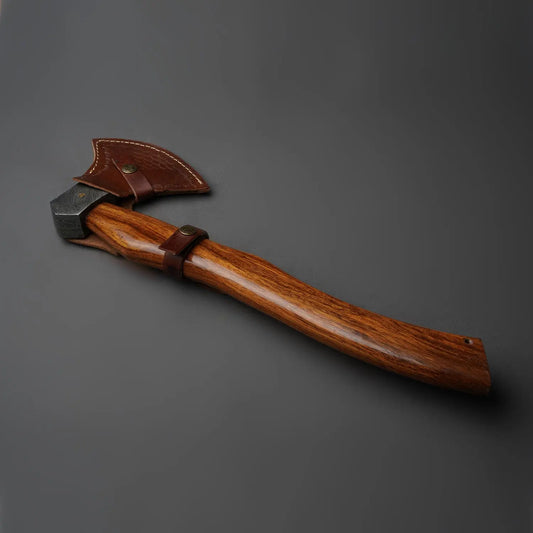
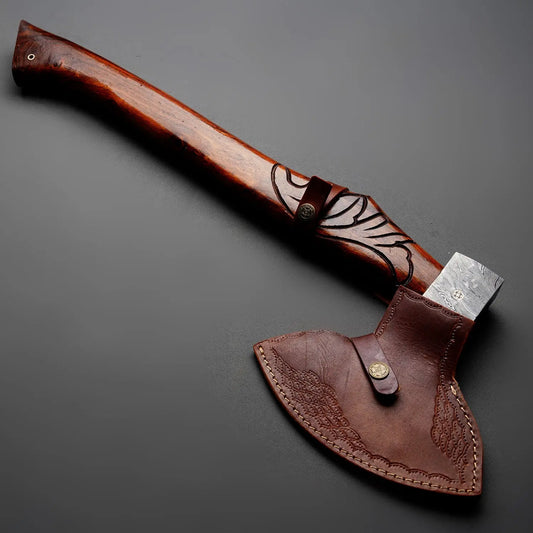
Explore Damascus Axes by Arham Cutlery, including Damascus steel axes and hand forged Damascus designs crafted for outdoor use, camping, collecting, and buyers who appreciate traditional forged craftsmanship. The collection includes compact hatchets, bearded axe profiles, engraved pieces, and Viking axes with wood, rosewood, and other handle material options depending on the model.

Many buyers choose hand forged Damascus axes for their layered appearance, while pattern-welded Damascus adds distinctive visual character to selected designs. Our Viking axes range includes compact and full-size Norse-inspired styles, with some Viking axes featuring a bearded axe head, leather wrapping, engraved details, or a Valknut motif where specified. When comparing a bearded axe or other Viking axes, consider head geometry, handle material, balance, cutting edge, and edge retention. A Damascus axe is not automatically a splitting axe, so always choose according to the actual head shape and intended use.

For broader chopping tools, explore our Axe / Tomahawk collection, or browse more Norse-inspired designs in the Viking Axes collection.

What Is a Damascus Axe?

A Damascus axe combines the practical form of an axe or hatchet with the distinctive layered appearance associated with Damascus steel. Depending on the design, Damascus steel axes may use compact hatchet proportions, traditional bearded heads, Viking-inspired profiles, or larger outdoor axe shapes.

At Arham Cutlery, the Damascus Axes collection brings together handcrafted designs for outdoor use, camping, collecting, gifting, and buyers who appreciate forged patterned steel.

For shoppers comparing different axe styles and steels, explore the broader Axe / Tomahawk collection.

The Arham Damascus Forge Standard

A Damascus axe should offer more than an attractive pattern.

At Arham Cutlery, we consider steel construction, head geometry, cutting edge, handle length, balance, grip, sheath design, craftsmanship, and intended use.

We call this the Arham Damascus Forge Standard.

The idea is straightforward: patterned steel should work together with a practical axe profile rather than becoming the only reason to choose the tool.

What Makes Damascus Steel Axes Different?

The most obvious difference is the visible steel pattern.

A Damascus axe can show flowing, twisted, layered, or other forged patterns across the head, giving each piece a different appearance from a plain polished or forged-carbon-steel axe.

Because Damascus patterns naturally vary, handmade pieces can have individual character even when they follow the same general design.

The Artisan Forged Damascus Hatchet with Rosewood Grip is one example of a compact twisted-pattern Damascus design paired with natural rosewood.

Hand Forged Damascus Construction

Many buyers specifically look for hand forged Damascus because they want visible craftsmanship alongside the layered steel appearance.

Forging alone, however, should not be the only buying consideration.

A useful axe also depends on:

head profile, grind, edge geometry, steel combination, heat treatment, handle construction, balance, and overall dimensions.

A decorative pattern cannot compensate for poor proportions or a handle that does not suit the intended use.

Damascus Hatchets vs. Full-Size Axes

Compact Damascus hatchets and larger Damascus steel axes serve different purposes.

A hatchet generally has a shorter handle and smaller overall footprint, making it easier to carry and store.

A longer axe offers more reach and leverage but also takes up more space.

Buyers specifically interested in compact designs can compare the Hatchets collection.

For Norse-inspired compact styles, the Viking Hatchets collection provides another useful comparison.

Damascus Viking Axes

Viking axes are a major part of the visual appeal of this category.

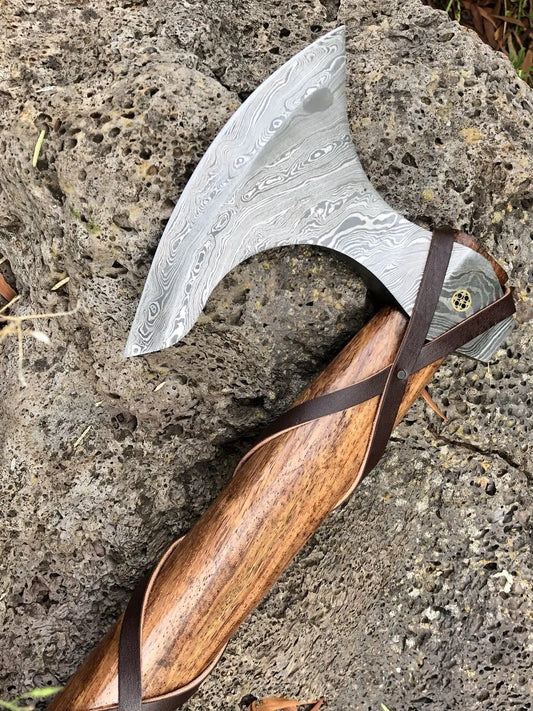
Norse-inspired designs may feature bearded heads, extended cutting edges, engraved details, leather wrapping, or other traditional-style elements depending on the model.

The Damascus Steel Viking Bearded Axe with Rosewood Handle is a strong example of patterned steel combined with a recognizable bearded profile.

For a wider range of Norse-inspired designs beyond Damascus steel, browse the Viking Axes collection.

What Is a Bearded Axe Profile?

A bearded axe has a cutting edge that extends downward below part of the axe head, creating the distinctive lower “beard.”

This profile is strongly associated with historical Scandinavian axe forms and remains popular in modern Viking-inspired pieces.

Today, buyers may choose bearded Damascus axes for collecting, historical styling, outdoor gear, display, or simply because they prefer the distinctive head shape.

When comparing them, look beyond appearance and consider handle length, head size, edge length, and overall balance.

Valknut and Norse-Inspired Decoration

Some Viking-style axes may feature Norse-inspired decoration such as a Valknut motif, engraved patterns, knotwork, or other symbolic designs where specified.

Decorative features can add collector appeal, but they should be treated separately from the functional specifications of the axe.

Always check individual product photographs and descriptions because not every Damascus Viking axe carries the same engraving or symbol.

Engraved Damascus Axes

Hand engraving can give a Damascus axe another layer of visual detail beyond the steel pattern itself.

The Hand Forged Damascus Steel Hand Engraved Axe is one example within the collection.

For collectors, an engraved head may be especially appealing because it combines patterned steel with additional handcrafted surface detail.

The best choice depends on whether your priority is outdoor utility, traditional styling, craftsmanship, or collector presentation.

Choosing the Right Handle Length

Handle length influences leverage, control, portability, and overall feel.

A compact Damascus hatchet can be easier to pack and handle in tight spaces.

A longer Damascus axe can provide greater reach and a different swinging balance.

The 19-Inch Custom Handmade Damascus Steel Axe shows how a longer wood-handled design differs from compact hatchet proportions.

Always check actual measurements rather than judging size only from photographs.

Rosewood and Natural Wood Handles

Natural wood works especially well with the traditional appearance of Damascus steel.

Rosewood can provide rich coloration and visible grain, while other woods can produce lighter or darker styles depending on the design.

When choosing a wood handle, consider:

handle length, thickness, contour, grain, finish, head attachment, and balance.

Appearance matters, but the handle should also suit the size and weight of the axe head.

Why Balance Matters

A well-proportioned axe should feel balanced between the head and handle.

A very heavy head on a short or uncomfortable handle may feel awkward.

Likewise, a long handle does not automatically make an axe better if the overall proportions do not suit the intended use.

For Damascus axes, compare the complete tool rather than focusing only on the patterned head.

Head size, handle length, overall weight, edge profile, and grip all work together.

Flat-Grind Damascus Axes

Some Damascus axes use a flat grind, creating a straightforward blade geometry from the axe face toward the cutting edge.

The Custom Hand Forged Damascus Steel Flat Grind Axe is one example within the collection.

Grind type can influence how the cutting edge feels and how material moves around the axe head.

It should be considered alongside edge thickness, steel, head shape, and intended use.

Leather Sheaths for Damascus Axes

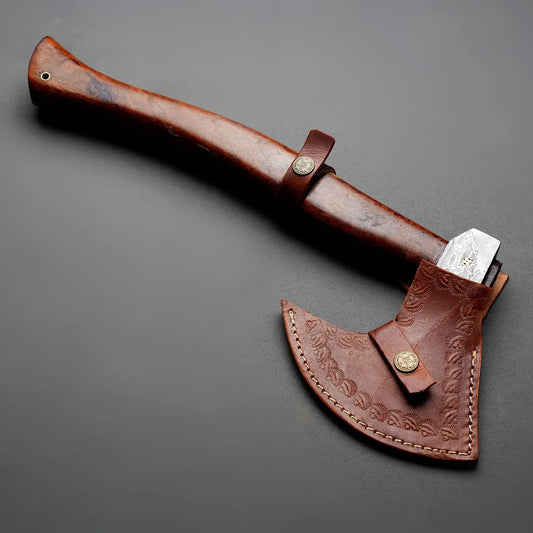
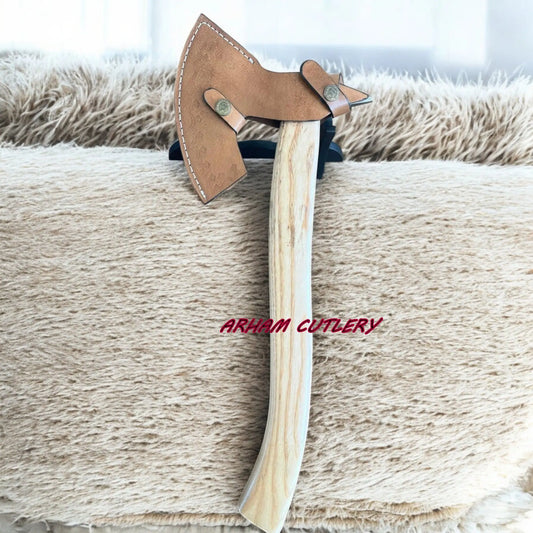
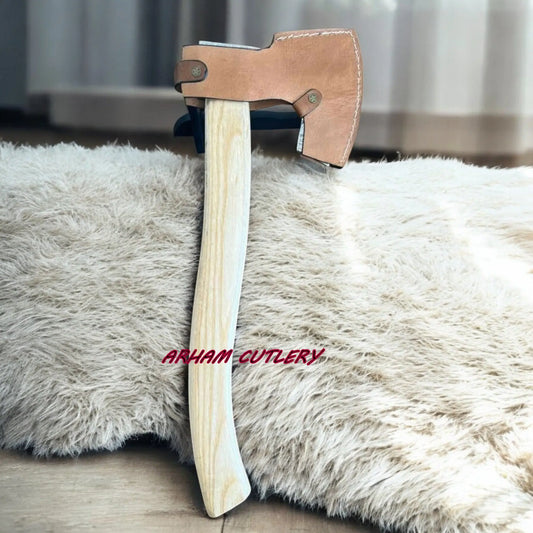
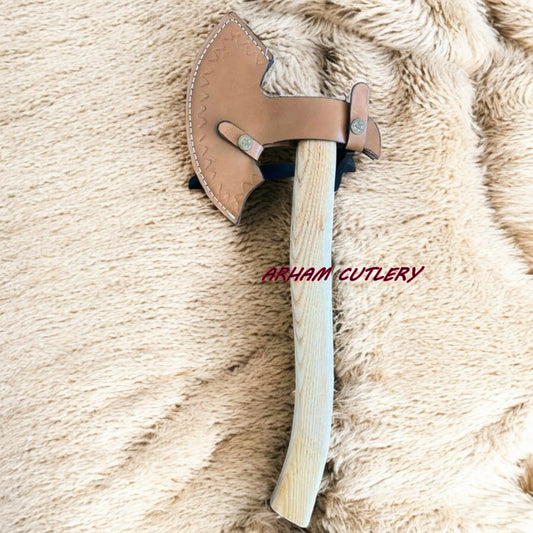
Many handmade Damascus axes are supplied with a leather edge cover or sheath depending on the model.

The sheath helps cover the cutting edge during storage and transport while complementing the traditional handmade appearance.

Check the individual product listing because sheath shape, leather type, coverage, and attachment method may vary.

Do not leave a wet steel head enclosed in damp leather for extended periods.

Damascus Axes for Camping and Outdoor Use

For camping or outdoor gear, portability becomes an important consideration.

A compact hatchet can be useful when packing space is limited, while a larger axe provides different leverage and reach.

Consider:

overall length, head weight, cutting-edge size, handle grip, steel construction, sheath, and how the axe will be transported.

The best outdoor axe is not necessarily the largest one.

It should match the tasks and carrying requirements you expect.

Damascus Axes for Collectors

Damascus axes can have strong collector appeal because several visual elements come together in one piece.

These may include:

patterned steel, forged texture, bearded head shapes, rosewood handles, hand engraving, leatherwork, and Norse-inspired decoration.

For a collector, pattern and craftsmanship may carry more weight than portability.

For an outdoor user, dimensions, balance, edge geometry, and handle comfort may matter more.

Neither approach is wrong—the buying criteria simply change with the purpose.

Damascus Axe vs. Carbon Steel Viking Axe

A Damascus Viking axe emphasizes layered steel pattern and handmade visual character.

A conventional carbon-steel Viking axe may provide a simpler forged appearance without the layered pattern.

Both can use bearded profiles, wood handles, leather wrapping, or historical-inspired styling.

Buyers interested primarily in Norse design rather than steel pattern should compare the full Viking Axes collection before deciding.

How to Choose the Right Damascus Axe

Start with the intended purpose.

For camping or compact outdoor carry, compare smaller hatchets.

For a more substantial traditional axe, consider longer handles and larger heads.

For a Viking-inspired piece, compare bearded profiles, engraving, handle styling, and Norse details.

For collecting, Damascus pattern and craftsmanship may become more important.

Then compare:

overall length, head dimensions, cutting edge, Damascus pattern, handle material, balance, weight, grind, sheath, and intended use.

Choose the whole axe not just the pattern.

Why Arham Cutlery Offers Different Damascus Axe Styles

One buyer may want a compact hand forged Damascus hatchet with rosewood.

Another may prefer a larger wood-handled outdoor axe.

A Viking collector may choose a bearded head or Norse-inspired engraving, while another buyer may prefer a clean flat-grind design.

That variety is the purpose of the Arham Damascus Forge Standard: combining patterned steel, head geometry, handle proportions, craftsmanship, and carry style so buyers can choose a Damascus axe according to their actual priorities rather than one generic pattern.

FAQs

How expensive is real Damascus?


The price of real Damascus varies widely based on steel construction, forging work, axe size, handle material, engraving, and overall craftsmanship. Price alone does not prove quality or authenticity.

Who makes the best axe in the world?


There is no single best axe maker for every buyer. Compare steel, head geometry, handle construction, balance, edge quality, intended use, and craftsmanship before choosing.

How can you tell if a blade is real Damascus?


Look beyond the visible pattern. Check the maker’s steel specifications, construction details, pattern consistency, and product information rather than judging authenticity from appearance alone.

What is so special about Damascus steel?


Damascus steel is known for its distinctive layered pattern and handcrafted appearance. Actual performance also depends on steel composition, heat treatment, geometry, and edge quality.

What should I look for in a Damascus axe?


Compare head shape, cutting edge, steel construction, handle material, balance, overall weight, sheath, and intended use before choosing.