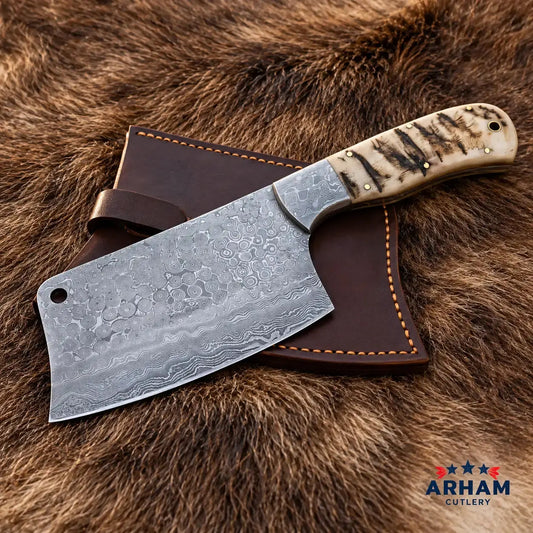
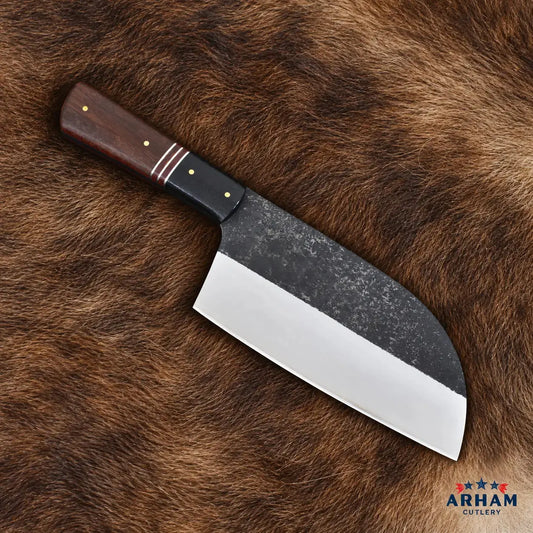
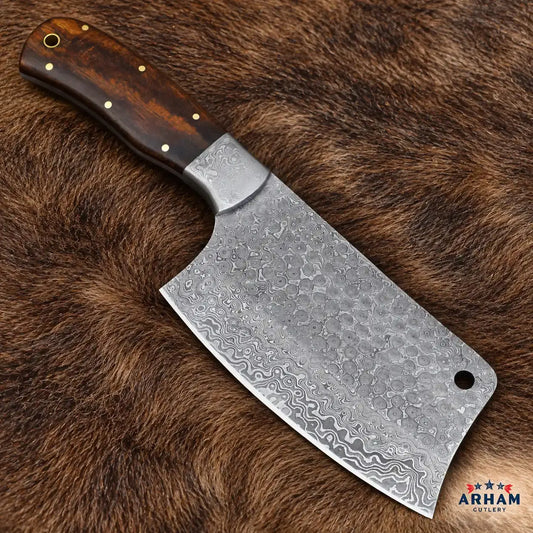
What Is a Cleaver Knife?
A cleaver knife is a broad-bladed kitchen knife designed for chopping, slicing, meat preparation, vegetables, BBQ, and other food-preparation tasks where a larger cutting surface can provide control and efficiency. Cleavers come in different forms, ranging from relatively agile kitchen choppers to heavier butcher-style blades.
At Arham Cutlery, the Cleaver Knives collection is built around choice rather than one single design. Our range can include handmade Damascus cleavers, stainless steel kitchen cleavers, Serbian-style choppers, and substantial chef cleavers with different blade proportions and handle materials.
For cooks looking beyond cleavers, our Kitchen Knives collection offers a wider range of chef and food-preparation blades.
The Arham Cleaver Balance Standard
A useful cleaver should not be judged only by how large or heavy the blade looks.
At Arham Cutlery, we look at the relationship between blade geometry, weight, balance, handle control, steel, and intended cutting task. We call this the Arham Cleaver Balance Standard.
Blade Weight Should Match the Task
A heavier cleaver can provide additional momentum during chopping, while a lighter blade may feel quicker and more controlled during repetitive vegetable, meat, and general kitchen preparation.
Neither approach is automatically better. The important question is whether the blade weight matches the work you expect the knife to perform.
Balance Matters More Than Bulk
An oversized cleaver that feels poorly balanced can become tiring during extended food preparation. Handle length, blade width, blade thickness, weight distribution, and construction all contribute to how controlled the knife feels in use.
The best cleaver should feel substantial without feeling difficult to manage.
Why the Broad Blade Matters
A broad cleaver blade provides more than chopping presence. Blade height can provide useful knuckle clearance, a large cutting surface, and convenient food transfer from the cutting board when appropriate technique is used.
Blade width should still be matched to the job rather than selecting the widest knife simply because it looks more powerful.
Damascus Steel Cleaver Knives
A Damascus cleaver knife combines a broad kitchen blade with the distinctive visual character of patterned steel. Damascus works particularly well with handcrafted handle materials such as rosewood, horn, wood, and other natural materials.
For cooks who want Damascus craftsmanship as part of a complete kitchen setup, this 5 Piece Handmade Damascus Chef Knife Set includes a cleaver alongside other essential kitchen blade styles.
Damascus steel requires sensible maintenance. Clean the blade after food preparation, dry it immediately, and avoid leaving moisture or acidic food residue on the steel for extended periods.
Stainless Steel Cleaver Knives
Stainless steel cleavers are a practical option for cooks who prioritize corrosion resistance and relatively straightforward kitchen maintenance.
The Handmade Stainless Steel Kitchen Cleaver is one example from Arham Cutlery, using a broad 7-inch blade designed for chopping, cutting, and slicing.
Steel choice should never be considered alone. Blade geometry, edge design, balance, construction, and the intended cutting task all influence real-world performance.
Serbian-Style Cleaver Knives
The Serbian cleaver has become popular with home cooks, BBQ enthusiasts, and outdoor food-preparation users because of its distinctive broad profile and versatile working shape.
Compared with a conventional rectangular kitchen cleaver, Serbian-style knives often use a more curved or forward-sweeping blade profile. This can provide a different feel during chopping and slicing while retaining the large working surface buyers expect from a cleaver-style knife.
Serbian cleavers should still be selected according to blade thickness, weight, handle comfort, and intended use rather than appearance alone.
Meat Cleaver vs. Kitchen Cleaver
The terms meat cleaver and kitchen cleaver are often used loosely, but they do not always describe the same type of knife.
A kitchen cleaver may be designed for vegetables, herbs, boneless meat, slicing, and general food preparation. A heavier meat or butcher cleaver may use more blade mass and stronger edge geometry for tougher preparation work.
Never assume that every broad-bladed cleaver is designed for chopping through hard bones. Always check the individual knife specifications and intended use before applying heavy impact.
Cleaver Knife vs. Chef Knife
A traditional chef knife normally uses a narrower blade profile suited to slicing, mincing, rocking cuts, and general kitchen preparation.
A cleaver provides a broader working surface and often more blade weight. Some cooks prefer that additional mass and blade height for chopping and ingredient preparation.
Many kitchens benefit from having both rather than expecting one knife to perform every cutting task equally well. You can compare additional chef-style options in our Kitchen Knives collection.
Cleaver Knife vs. Ulu Knife
Cleaver knives and Ulu knives can both be useful for chopping and food preparation, but their designs are fundamentally different.
A cleaver uses a conventional handle extending behind the blade, while an Ulu generally positions the handle above a curved cutting edge. This changes the hand position and cutting motion considerably.
If you enjoy alternative chopping designs, explore our Ulu Knives collection.
Cleaver Knife vs. Fillet Knife
A cleaver and a fillet knife represent very different approaches to food preparation.
Cleavers use broad, relatively substantial blades, while fillet knives are typically narrow and designed for precise slicing and controlled work around fish and delicate cuts.
If fish preparation is your main priority, browse our Fillet Knife collection.
Choosing the Right Cleaver Blade Size
Compact Cleavers
A compact cleaver can provide the broad-blade experience without excessive weight. Smaller models may suit home cooks who prioritize control, convenient storage, and manageable everyday preparation.
Mid-Size Kitchen Cleavers
A mid-size cleaver can offer a strong balance between blade surface, chopping capability, and maneuverability. For many cooks, this size range provides enough blade to feel substantial without becoming unnecessarily heavy.
Larger Heavy-Duty Cleavers
Larger cleavers provide additional blade presence and potentially greater chopping momentum, but increased size also means additional weight.
A larger cleaver should be chosen because its dimensions suit your preparation style—not simply because a bigger knife looks more impressive.
Cleaver Handle Materials
The handle is especially important on a cleaver because the broad blade can place greater demands on grip and control.
Wood Handles
Natural wood handles provide warmth, grain variation, and traditional handcrafted character. Rosewood and other dense woods pair particularly well with Damascus and Serbian-style cleavers.
Ram Horn Handles
Ram horn provides natural texture, color variation, and individuality. Because horn is a natural material, no two handles will look exactly the same.
Resin and Composite Handles
Resin and composite materials offer another practical option, providing more consistent appearance and the possibility of distinctive colors and patterns.
Regardless of material, handle shape and comfort should suit the size and weight of the blade.
Cleaver Knives for Meat Preparation
Cleavers are strongly associated with meat preparation, but the exact blade design still matters.
A broad kitchen cleaver can be useful for portioning boneless meat, preparing poultry, slicing larger cuts, and BBQ preparation. Heavier work should only be performed with a knife specifically designed for that purpose.
For buyers whose main priority is field use rather than kitchen preparation, our Handmade Hunting Knives collection offers more specialized outdoor blade profiles.
Cleaver Knives for Vegetables
A cleaver is not only a meat-processing knife. Broad kitchen cleavers can also be extremely useful for vegetables and repetitive food preparation.
Blade height can provide good knuckle clearance while a long cutting edge makes chopping onions, cabbage, herbs, peppers, carrots, and other produce efficient when proper technique is used.
Damascus vs. Stainless Steel Cleavers
Choose the steel according to your priorities.
A Damascus steel cleaver may appeal to cooks and collectors who value patterned steel, handmade appearance, and traditional craftsmanship.
A stainless steel cleaver may suit someone who prioritizes corrosion resistance and relatively simple kitchen maintenance.
Neither material automatically makes a knife superior. Heat treatment, blade geometry, edge condition, handle design, construction, and proper use all matter.
How Sharp Should a Cleaver Knife Be?
A kitchen cleaver should have an edge appropriate to the work it was designed to perform.
Thinner chopping and slicing cleavers may use a more refined cutting edge, while heavier cleavers intended for demanding work may benefit from stronger edge geometry.
The goal is not simply to create the thinnest edge possible. The edge needs to balance cutting performance and durability.
When your knife begins losing performance, our guide to the difference between honing and sharpening can help you decide what type of edge maintenance is actually needed.
How to Care for a Cleaver Knife
Proper maintenance is especially important with handmade kitchen blades.
After use, hand wash the cleaver with mild soap and water and dry it immediately. Avoid leaving handmade knives soaking in a sink, and do not assume that a handcrafted cleaver is dishwasher safe.
Damascus and high-carbon blades deserve additional attention to moisture. When appropriate for the blade material, a light coating of food-safe oil can provide additional protection during storage.
Natural wood and horn handles should also be kept clean and dry and should not be exposed unnecessarily to prolonged moisture or extreme heat.
Safe Storage for Cleaver Knives
Because cleavers have broad exposed cutting edges, storage should protect both the edge and anyone reaching into the storage area.
Suitable options may include a knife block designed for the blade dimensions, a secure magnetic strip, a blade guard, a knife roll, or another purpose-built storage solution.
If a leather sheath is supplied with a knife, make sure the blade is completely clean and dry before storing it inside.
How to Choose the Right Cleaver Knife
Start by asking what you prepare most often.
If vegetables and everyday kitchen work dominate your cooking, prioritize manageable weight, blade control, and comfortable handle geometry.
If meat and BBQ preparation are more important, you may prefer a more substantial blade with additional working surface.
If handcrafted appearance matters, Damascus steel and natural handle materials can provide more individuality.
Before buying, compare blade length, blade width, steel type, blade weight, handle material, balance, construction, edge geometry, and intended use.
The best cleaver is not necessarily the biggest or heaviest knife. It is the one that fits the food preparation you actually perform.
Who Buys Handmade Cleaver Knives?
Handmade cleavers appeal to home cooks, professional chefs, BBQ enthusiasts, outdoor cooks, butchers, and knife collectors.
Some buyers want a broad working blade for everyday preparation. Others are attracted to Damascus patterns, natural horn or wood handles, Serbian-style designs, or the individuality of handmade construction.
A handcrafted cleaver can also make a distinctive gift for someone who spends serious time cooking, grilling, BBQing, or collecting knives.
Why Arham Cutlery Builds Cleavers Around Balance
At Arham Cutlery, a Cleaver Knife should be more than an oversized blade.
The relationship between blade width, steel, weight, edge geometry, handle shape, and balance determines whether the knife actually feels purposeful in use.
That is why the Arham Cleaver Balance Standard focuses on the complete knife rather than one specification.
A Damascus cleaver with a natural handle should still feel controlled. A stainless kitchen cleaver should still have appropriate blade geometry. A Serbian-style cleaver should offer more than an unusual silhouette.
The goal is simple: a handmade cleaver that feels purposeful in the hand, suits the food being prepared, and gives the buyer a clear reason to choose that particular design.