What Is a Castration Knife?
A castration knife is a compact fixed-blade ranch tool associated with livestock work, stockman use, and traditional Western utility. Unlike a general-purpose hunting or Bowie knife, this style usually emphasizes controlled handling, a manageable blade, and a secure grip rather than unnecessary blade length.
At Arham Cutlery, the Castration Knives collection is built around compact fixed blades that combine practical ranch-focused proportions with handmade materials, leather carry, and distinctive Western character.
For buyers comparing similar working patterns, our Cowboy Bull Cutter Knives collection offers another closely related ranch-knife category.
The Arham Stockman Control Standard
Arham Cutlery approaches a castration knife differently from a generic small fixed blade.
The design should work as a complete system built around control, grip security, blade proportion, carry, and maintenance.
We call this the Arham Stockman Control Standard.
Compact Blade Control
A castration knife does not need excessive length to be useful.
Compact blade proportions can make a fixed blade easier to control during detailed ranch and livestock utility work while also making the knife easier to carry.
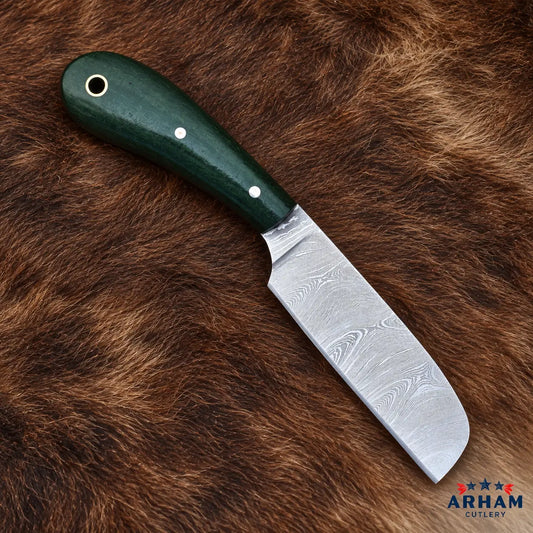
Current Arham designs illustrate this compact approach. For example, the Kalecrest Rancher Damascus Castration Knife uses a short fixed-blade format with a Micarta handle and leather sheath.
Handle Security Matters
A good ranch knife needs a handle that feels controlled in the hand.
Handle material, contour, texture, and finger placement can matter just as much as blade steel.
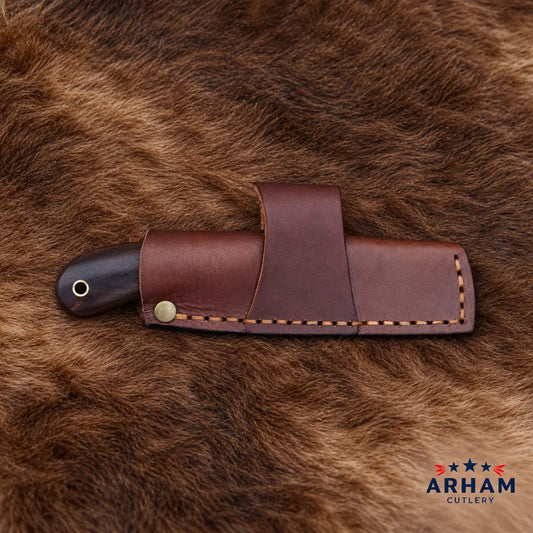
Arham Cutlery currently offers Castration Knives with Micarta, bone, blue-dyed bone, and rosewood-style handles, giving buyers a choice between traditional natural materials and more modern grip-focused options.
Finger Guard vs. Open Handle Designs
Some castration knives use an integrated finger guard, while others maintain a cleaner traditional handle profile.
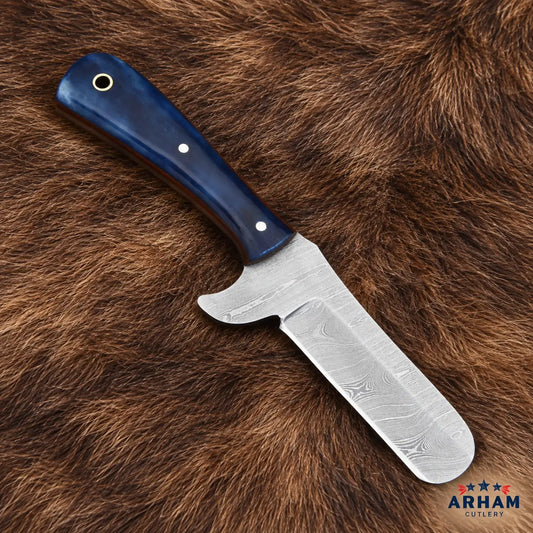
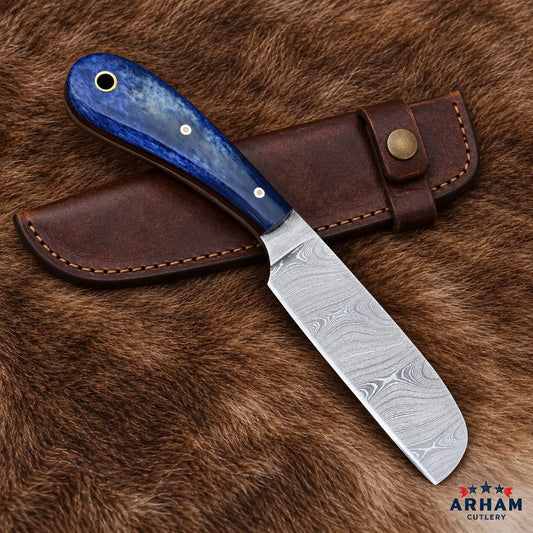
A finger guard can provide additional separation between the hand and cutting edge. The Blueguard Stockman Damascus Castration Knife is one example of a compact Arham model using an integrated guard together with a blue bone handle and horizontal leather sheath.
The better choice depends on grip preference, hand position, and the style of knife the buyer prefers.
Damascus Steel Castration Knives
Damascus steel gives a compact ranch knife a very different character from a plain polished blade.
The visible layered pattern works especially well with natural handle materials such as bone and rosewood, while still creating a rugged handmade appearance appropriate for Western working knives.
Current Arham Cutlery Castration Knives use patterned carbon-steel Damascus across several models.
Because carbon-steel Damascus requires more moisture care than many stainless steels, proper cleaning and drying are important. For a more detailed maintenance guide, read our article on how to clean a Damascus steel knife without damaging the pattern.
Castration Knife Handle Materials
Handle choice changes both the look and feel of the knife.
Micarta Castration Knives
Micarta offers a modern alternative to traditional bone and wood.
It is valued for durability, grip, and consistency, making it well suited to working fixed blades that may be exposed to outdoor conditions.
The green Micarta option in this collection gives the traditional ranch-knife format a more modern working appearance. If you choose Micarta, our Micarta knife handle maintenance guide explains how to keep the material clean and maintain its surface over time.
Bone Handle Castration Knives
Bone handles give a knife a traditional Western appearance with natural color and texture variation.
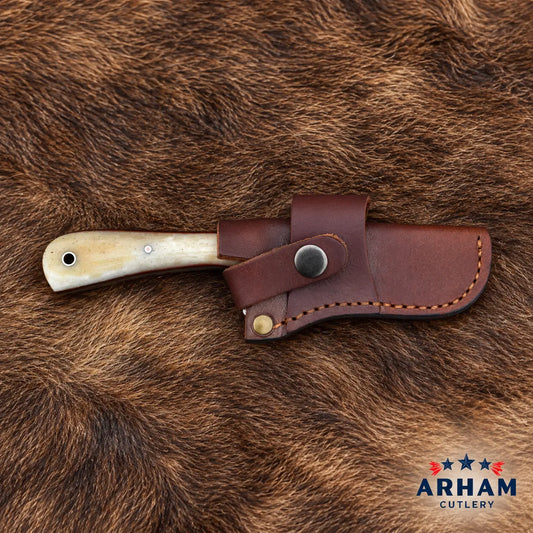
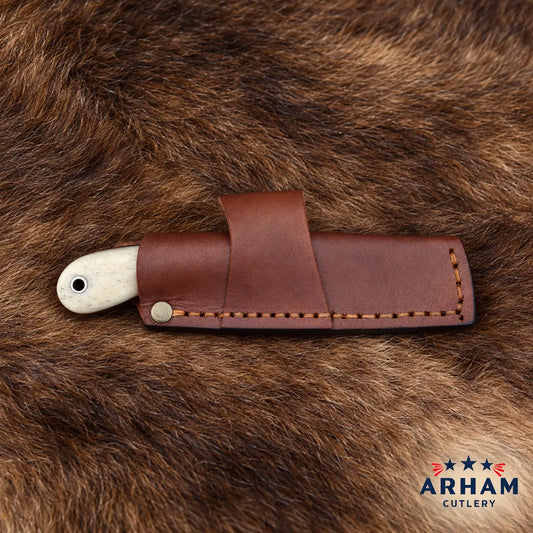
Current Arham Cutlery models include both natural bone and blue-dyed cattle bone options. The Boneguard Stockman Damascus Castration Knife combines a bone handle with a compact fixed-blade design, while the blue-bone variants add a more distinctive visual style.
Rosewood Handle Castration Knives
Rosewood gives a ranch knife a warmer, more traditional appearance.
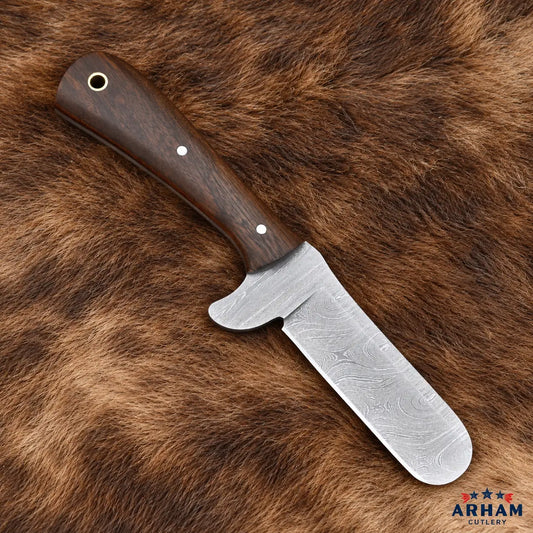
The Roseguard Rancher Damascus Castration Knife combines a wood handle with an integrated finger guard, offering a different feel and visual profile from the Micarta and bone models.
Why Leather Sheaths Matter
A compact fixed blade is only practical if it can be stored and carried securely.
Leather sheaths help protect the blade when it is not in use and provide a practical way to transport a working knife.
Depending on the model, Arham Cutlery castration knives may use conventional or horizontal belt-carry configurations. The Blueguard Stockman, for example, includes a horizontal leather sheath.
Buyers who want a broader selection of fixed blades built around belt carry can also explore our Belt Knives collection.
Castration Knife vs. Bull Cutter Knife
The terms can overlap in ranch and Western knife culture, but they do not always describe exactly the same design.
A castration knife generally emphasizes compact control and livestock-oriented utility.
A bull cutter knife may use a broader or more distinctive ranch-working profile and is often treated as its own Western category.
Arham Cutlery keeps the two categories separate so buyers can compare the different styles more easily. Explore our Cowboy Bull Cutter Knives if you want to compare the two patterns directly.
Castration Knife vs. Skinning Knife
A skinning knife is shaped around game processing and controlled cutting around hide and tissue.
A castration knife belongs more directly to ranch and livestock utility.
Both may use compact fixed-blade formats, but their blade shapes and intended working roles can differ.
If your main interest is hunting or game-processing work rather than stockman utility, browse our Skinning Knives collection.
Castration Knife vs. Cowboy Knife
A Cowboy Knife is a broader Western category.
It may include compact ranch knives, bull cutters, larger fixed blades, decorative Western designs, and a variety of blade profiles and steels.
A Castration Knife is a more specific working pattern centered on compact control and livestock-oriented use.
For a wider view of Western fixed blades, explore our Cowboy Knives collection.
How to Choose the Right Castration Knife
Start with blade size and control.
A compact knife can be easier to manage than an oversized fixed blade when precise handling matters.
Next compare the handle. Micarta offers a modern, consistent grip, while bone and wood provide more traditional Western character.
Then consider whether you prefer a finger guard. Some users like the added separation between the hand and cutting edge, while others prefer a simpler handle profile.
Finally, compare sheath style, overall dimensions, blade steel, and maintenance requirements.
The best choice is the knife whose size, handle, and carry system fit the way you intend to use and transport it.
Maintaining a Damascus Castration Knife
After use, clean the blade and dry it thoroughly.
Carbon-steel Damascus should not be stored wet or left in a damp leather sheath for extended periods. A light protective coating of suitable blade oil can help reduce the risk of surface corrosion.
If the edge begins to lose performance, it is also useful to understand the difference between honing and sharpening before removing unnecessary steel from the blade.
Handle care depends on the material. Micarta generally needs simple cleaning, while natural bone and wood benefit from careful storage away from prolonged moisture and extreme conditions.
Ranch, Farm and Livestock Use
Castration knives are specialized livestock tools and should be treated accordingly.
They are not substitutes for veterinary knowledge or proper livestock-handling practices. Procedures involving animals should be carried out only by trained or experienced people and in accordance with applicable animal-welfare, veterinary, and local requirements. Oklahoma State University Extension similarly recommends veterinary consultation and proper training before implementing livestock castration methods.
Arham Cutlery’s role is to provide the knife; correct livestock procedure, sanitation, animal welfare, and legal compliance remain the responsibility of the person performing the work.
Why Arham Cutlery Builds Castration Knives Differently
At Arham Cutlery, we do not treat a Castration Knife as simply another small blade with a ranch name attached to it.
The category is built around controlled fixed-blade proportions, secure handle choices, useful sheath configurations, practical materials, and a distinctly Western working character.
That is the purpose of the Arham Stockman Control Standard.
A Micarta model should offer a different feel from a bone-handled knife. A finger-guard model should offer a different grip experience from a simpler open-handle design. A leather sheath should complement the size and carry style of the knife rather than being an afterthought.
That gives buyers meaningful choices instead of several knives that differ only in appearance.
Explore the collection and compare blade size, handle material, guard design, Damascus pattern, and sheath style to find the Arham Cutlery Castration Knife that best suits your ranch and stockman needs.