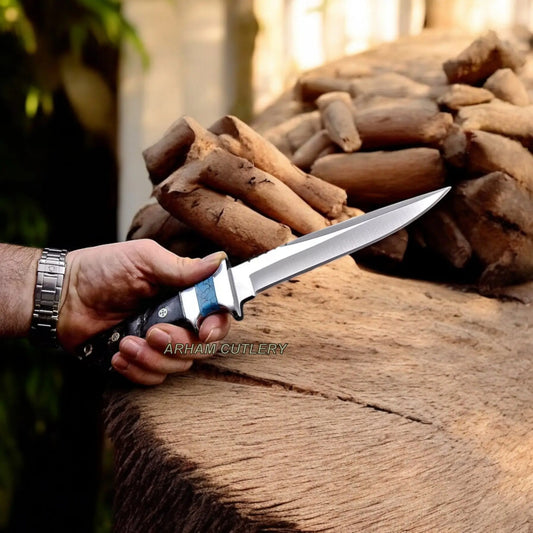
What Is a Sub Hilt Knife?
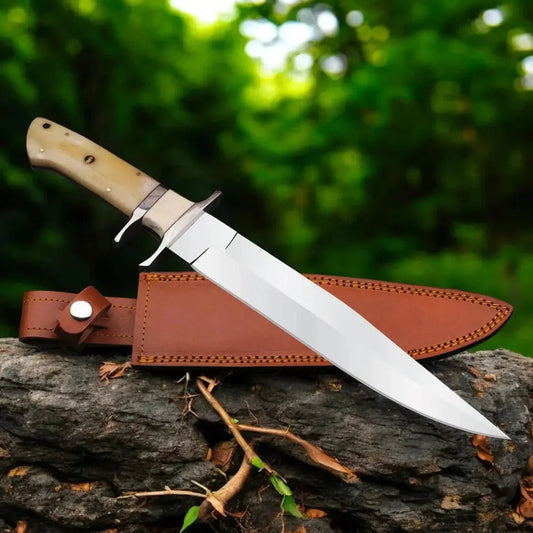
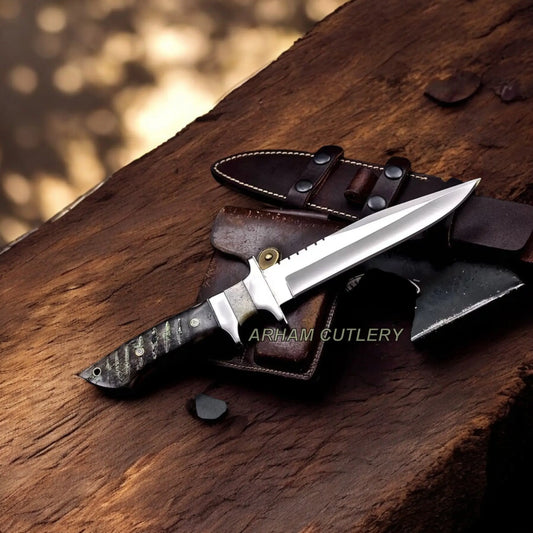
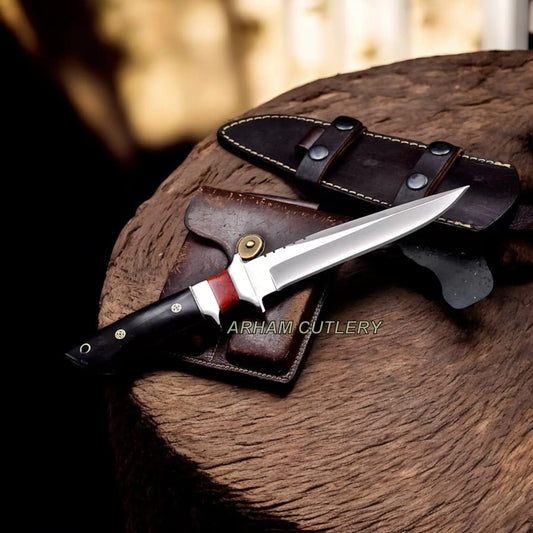
A sub hilt knife is a fixed-blade design recognized by an additional finger guard positioned behind the main guard. This secondary guard creates the distinctive handle profile that separates sub-hilt knives from many conventional hunting and Bowie-style fixed blades.
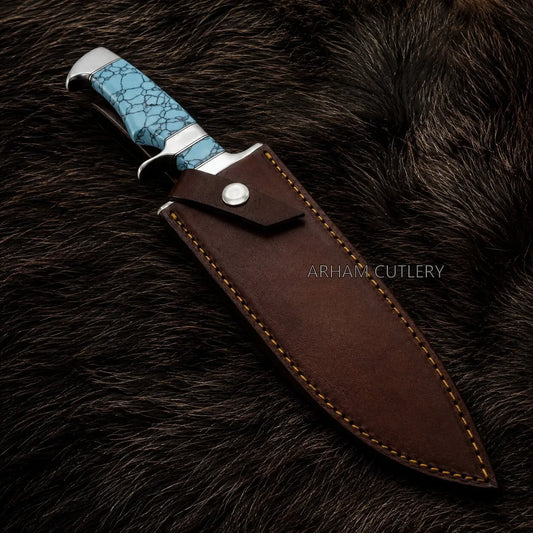
At Arham Cutlery, the Sub Hilt Knives collection includes handmade designs in steels such as ATS-34 and DC53, paired with natural and decorative handle materials including sheep horn, camel bone, buffalo horn, turquoise, and other custom combinations.
For larger traditional fixed-blade profiles, compare our Hunting Bowie Knives collection, or browse the wider Handmade Hunting Knives collection.
The Arham Sub-Hilt Control Standard
A sub-hilt design should offer more than an unusual-looking guard.
At Arham Cutlery, we consider blade geometry, steel, main guard, secondary guard, handle contour, tang construction, balance, overall size, and sheath design.
We call this the Arham Sub-Hilt Control Standard.
The goal is to combine the recognizable double-guard handle profile with a fixed blade that feels balanced and comfortable rather than adding decorative hardware without purpose.
How Does a Sub Hilt Work?
The secondary hilt sits behind the main guard and provides an additional point of contact around the fingers.
This changes the feel of the handle compared with a conventional single-guard knife.
For buyers, the important details are the spacing between the guards, handle thickness, finger clearance, overall handle length, and how comfortably the grip fits the hand.
Two sub-hilt knives can look similar in photographs but feel very different because of small changes in handle proportions.
The Classic Sub-Hilt Fighter Style
The term sub-hilt fighter is commonly used to describe the classic double-guard fixed-blade style associated with this handle configuration.
On Arham Cutlery, the term is useful mainly as a design and collector-style description. Buyers should still judge the knife by its steel, construction, dimensions, handle comfort, sheath, and intended lawful use rather than by the style name alone.
Modern sub-hilt designs can range from traditional-looking horn-handled knives to more colorful gemstone and turquoise combinations.
ATS-34 Sub Hilt Knives
ATS-34 is used on several current Arham Cutlery sub-hilt models.
The Handmade ATS-34 Sheep Horn Sub Hilt Knife pairs the steel with a natural sheep-horn handle and the distinctive secondary-guard profile.
Another option, the ATS-34 Sheep Horn & Camel Bone Sub Hilt Knife, combines multiple natural handle materials in the same general design family.
Steel choice matters, but it should always be considered together with heat treatment, grind, edge geometry, and overall construction.
DC53 Sub Hilt Knives
DC53 provides another steel option within the current collection.
The DC53 Sheep Horn & Turquoise Sub Hilt Knife combines a handmade fixed blade with sheep horn and turquoise-style handle detailing.
This gives buyers a visually different option from more traditional plain horn or bone handles.
When comparing DC53 with ATS-34 or other steels, consider maintenance, edge characteristics, blade geometry, and the complete knife rather than the steel name alone.
Sheep Horn Handles
Sheep horn gives sub-hilt knives strong natural character.
Color, texture, and surface pattern can vary from piece to piece, which means individual handmade handles may not look completely identical.
That natural variation is especially noticeable on designs such as the ATS-34 Sheep Horn Sub Hilt Knife.
When choosing horn, also consider handle shape, thickness, finger spacing, and how the material works with the secondary hilt.
Camel Bone & Mixed Natural Handles
Camel bone can create a lighter visual contrast against darker horn, metal fittings, or polished steel.
The ATS-34 Sheep Horn & Camel Bone Sub Hilt Knife combines two natural materials for a more decorative handmade appearance.
Natural bone and horn should be kept clean and protected from prolonged moisture and extreme heat.
The appearance is important, but grip comfort should remain the main buying consideration.
Buffalo Horn & Turquoise Details
Buffalo horn offers a darker natural handle style that pairs strongly with turquoise accents.
The ATS-34 Buffalo Horn & Turquoise Sub Hilt Knife is one example from the current live collection.
This type of material combination can appeal especially to collectors who want a knife that looks noticeably different from a conventional wood-handled fixed blade.
Sheep Horn & Turquoise Sub Hilt Designs
For buyers who prefer lighter natural horn with colorful detailing, the ATS-34 Sheep Horn Turquoise Sub Hilt Knife provides another live option.
Turquoise-style details can give the handle a more decorative appearance while the sub-hilt configuration remains the defining structural feature.
Collectors should compare individual product photographs because natural horn and decorative materials can vary.
Sub Hilt Knife vs. Bowie Knife
A sub-hilt knife and a Bowie knife can overlap in blade size and traditional fixed-blade styling, but the handle configuration is different.
A Bowie commonly uses a single primary guard.
A sub-hilt design adds the secondary finger guard behind it.
Buyers who prefer larger classic fixed blades without the extra hilt can compare the Hunting Bowie Knives collection.
The better choice depends on handle preference, blade dimensions, weight, guard design, and intended use.
Sub Hilt Knife vs. Standard Hunting Knife
A standard hunting knife may use a simpler handle and guard arrangement, making it lighter or more compact depending on the model.
A sub-hilt knife places more visual and ergonomic emphasis on the guard system.
For buyers comparing a wider range of field blade shapes, the Handmade Hunting Knives collection provides more fixed-blade options.
The best knife is the one whose size and grip suit the user—not simply the one with the most elaborate handle.
Belt Carry & Leather Sheaths
Many substantial fixed blades are designed around sheath carry.
When comparing a sub-hilt knife, pay attention to how the additional guard affects sheath shape, retention, handle access, and belt carry.
For more compact knives specifically built around belt-based carry, browse the Belt Knives collection.
Always check the individual product listing because sheath style and included accessories can vary.
Damascus Hunting Knives as an Alternative
Some buyers are drawn to sub-hilt knives because of handcrafted materials and collector character rather than the secondary guard alone.
If patterned steel is your main priority, compare the Damascus Hunting Knives collection.
Damascus blades create a different visual focus from ATS-34 or DC53 sub-hilt designs, allowing buyers to choose between guard-focused styling and patterned-steel presentation.
Blade Length & Overall Size
Sub-hilt knives can vary significantly in dimensions.
A longer blade provides more cutting edge but also increases overall weight and carry size.
The handle must also provide enough room for the main guard, secondary hilt, and comfortable finger placement.
Before choosing, compare:
blade length, handle length, overall length, blade thickness, weight where listed, and sheath dimensions.
Actual measurements are more reliable than judging size from product photographs alone.
Handle Comfort & Finger Clearance
The secondary hilt makes handle fit particularly important.
If the spacing is too narrow for the user's hand, the knife may feel uncomfortable even if the handle material looks attractive.
When comparing models, consider:
finger spacing, handle contour, guard shape, handle thickness, palm length, and overall balance.
Natural horn, bone, and turquoise details should complement the grip rather than interfere with it.
Tang Construction
Tang construction is another useful specification when comparing fixed blades.
Depending on the knife, the blade steel may extend through more or less of the handle.
The tang should be considered together with blade thickness, handle assembly, balance, and workmanship.
Do not assume two visually similar sub-hilt knives use identical internal construction unless the product specifications confirm it.
Sub Hilt Knives for Collectors
Sub-hilt knives have strong collector appeal because the additional guard gives them an instantly recognizable silhouette.
Sheep horn, buffalo horn, camel bone, turquoise-style details, polished steel, and handmade finishing can make individual pieces feel very different.
One collector may prefer a traditional ATS-34 sheep-horn design.
Another may choose DC53 with turquoise.
Another may prefer mixed natural materials.
The strongest collector piece is the one whose blade, handle, guard, and materials work together as a complete design.
How to Choose the Right Sub Hilt Knife
Start with the handle.
The secondary hilt needs to fit your hand comfortably, so finger spacing and grip shape are especially important.
Then compare:
steel type, blade length, overall size, tang construction, primary guard, secondary guard, handle material, balance, sheath, and intended use.
Choose ATS-34, DC53, D2, or another steel based on the complete knife rather than the steel name alone.
Choose horn, bone, turquoise, or other materials based on both appearance and grip.
Most importantly, choose a sub-hilt design whose proportions suit your hand.
Why Arham Cutlery Offers Different Sub Hilt Styles
One buyer may prefer the understated look of ATS-34 and sheep horn.
Another may choose camel bone for contrast.
Another may prefer buffalo horn and turquoise, while someone else may be drawn to DC53 with colorful handle details.
That variety is the purpose of the Arham Sub-Hilt Control Standard: combining blade steel, secondary-guard geometry, handle materials, proportions, and handmade character so buyers can choose a Sub Hilt Knife around their own preferences rather than one generic design.