What Is a Damascus Knife Set?
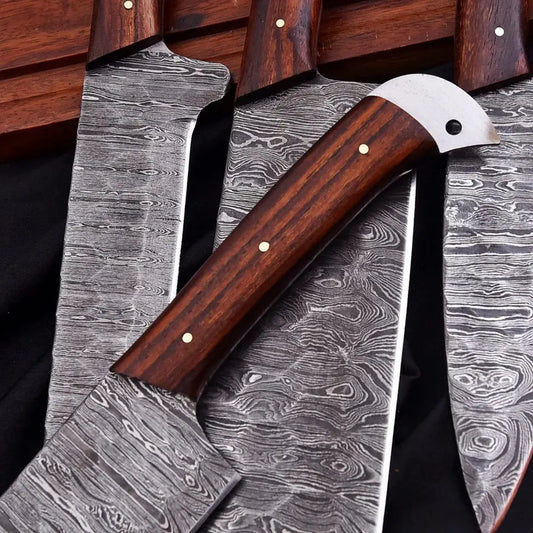
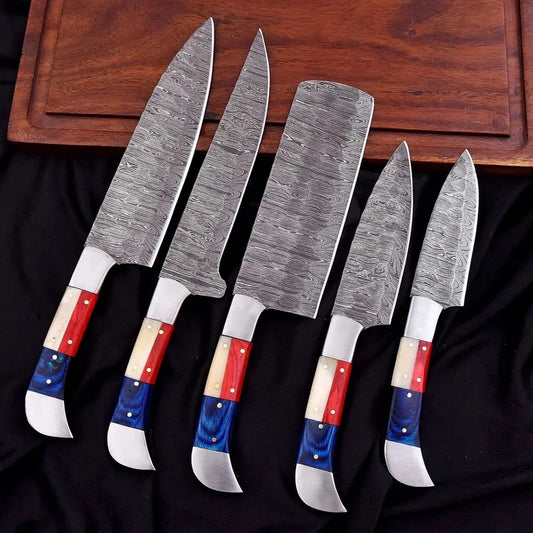
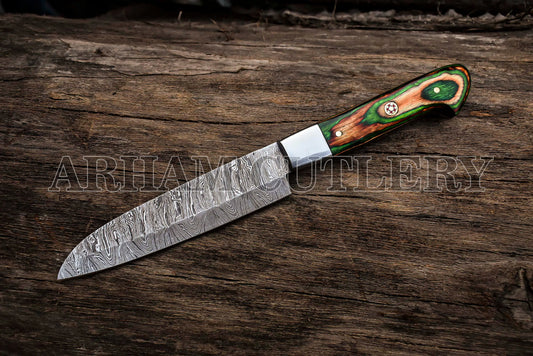
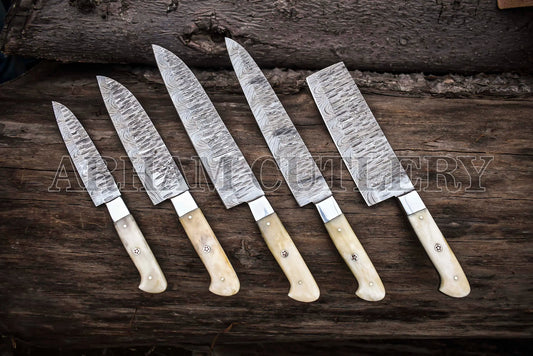
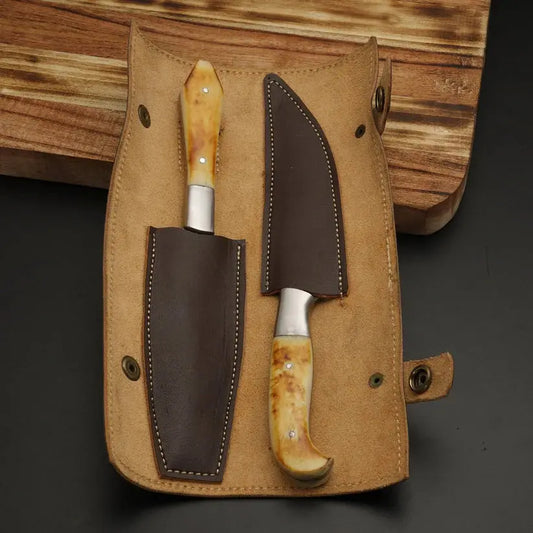
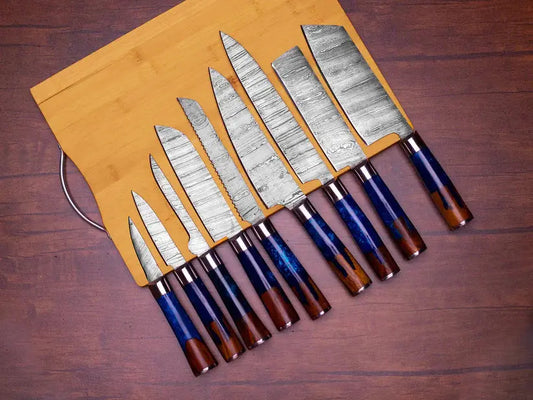
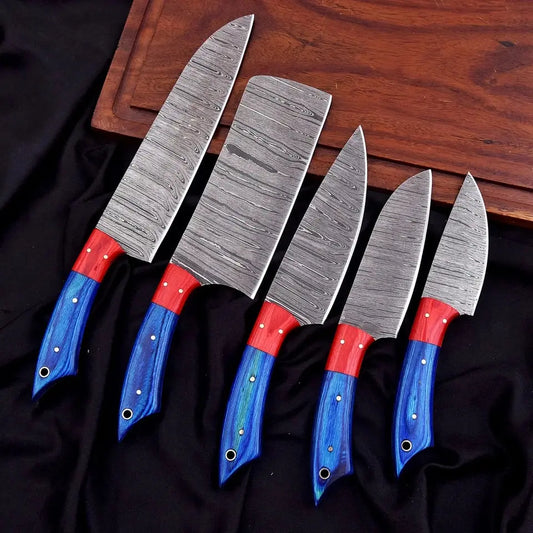
A Damascus knife set brings together multiple kitchen knives made with patterned Damascus steel, giving cooks a coordinated selection of blades for different food-preparation tasks. Depending on the set, this may include a chef’s knife, Santoku knife, cleaver, utility knife, bread knife, paring knife, and other specialty kitchen blades.
At Arham Cutlery, Damascus Knife Sets are designed for home cooks, professional chefs, collectors, and gift buyers who want practical kitchen versatility combined with distinctive handmade character.
If you are unsure which combination of knives belongs in your kitchen, our what knives you need in a kitchen set guide provides a useful starting point.
The Arham Complete Kitchen Set Standard
A knife set should not be judged simply by how many pieces are included.
At Arham Cutlery, we look at the relationship between blade variety, steel, handle comfort, construction, balance, storage, and real kitchen usefulness.
We call this the Arham Complete Kitchen Set Standard.
A well-designed five-piece set can be more useful than a much larger set when every knife has a clear purpose.
The goal is not to give you more knives. It is to give you the right knives.
The Chef’s Knife: The Core of the Set
A chef’s knife is usually the most versatile blade in a kitchen knife set.
It can handle vegetables, herbs, boneless meat, slicing, chopping, dicing, and everyday food preparation.
For many home cooks and professional chefs, the chef’s knife becomes the most frequently used blade in the entire set.
Buyers who want to compare complete sets with individual culinary blades can also explore the Kitchen Knives collection.
Why Include a Santoku Knife?
A Santoku knife provides another versatile option for chopping, slicing, and general kitchen preparation.
Its blade shape and cutting style differ from a traditional Western chef’s knife, giving cooks another option for vegetables, meat, and everyday prep.
Some cooks prefer a chef’s knife, others prefer a Santoku knife, and many benefit from having both available.
The Role of a Paring Knife
A paring knife handles detailed cutting tasks that larger blades are not designed for.
Peeling, trimming, fruit preparation, garnishing, and other precision work become easier with a small, controllable blade.
A balanced Damascus steel knife set should include different blade sizes rather than several knives that all perform the same job.
Cleavers in Damascus Knife Sets
Some Damascus kitchen sets include a cleaver or broad chopping blade.
Cleavers can be useful for vegetables, meat preparation, BBQ, and kitchen tasks where a larger working surface is helpful.
Buyers especially interested in broad kitchen blades can compare additional designs in the Cleaver Knives collection.
Fillet Knives and Specialty Kitchen Blades
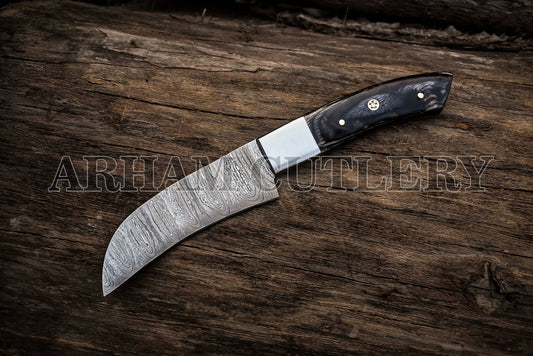
Not every home cook requires a fillet knife, but buyers who regularly prepare fish may find one especially useful.
Fillet knives use a narrower profile intended for controlled slicing and delicate preparation rather than the chopping tasks handled by a chef knife or cleaver.
For dedicated fish-preparation blades, explore the Fillet Knife collection.
Ulu Knives and Alternative Chopping Styles
Some cooks prefer adding less conventional blade styles to their kitchen collection.
An Ulu places the handle above a curved cutting edge, creating a different cutting motion from a conventional kitchen knife.
For buyers interested in alternative chopping designs, the Ulu Knives collection provides another category worth comparing.
Why Choose a Damascus Steel Knife Set?
A Damascus steel knife set appeals to buyers for both practical and visual reasons.
The patterned blades give the set a distinctive handmade appearance, while different knife profiles allow one collection to cover a broad range of food-preparation tasks.
For a home cook, the main benefit may be convenience and versatility. For a professional chef, it may be having several specialized blades available for different ingredients. For collectors and gift buyers, Damascus steel adds visual individuality.
If you are comparing whether a complete set is worthwhile, our guide on whether Damascus knife sets are worth it explores the decision in more detail.
Choosing the Right Number of Knives
A larger set is not automatically a better set.
4- and 5-Piece Damascus Knife Sets
Compact sets can provide the essential blades needed for most kitchen tasks without filling the kitchen with knives that rarely get used.
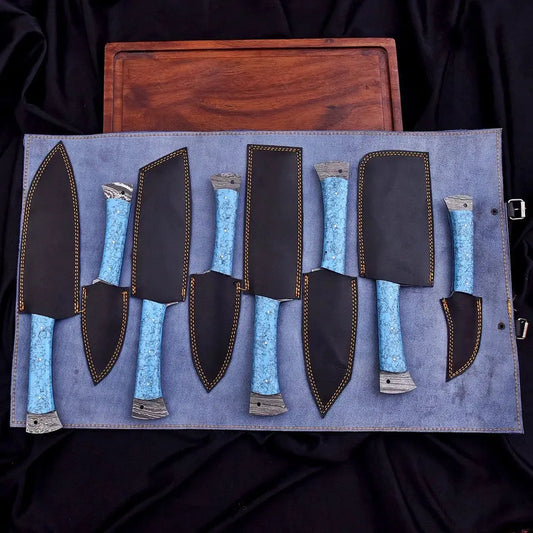
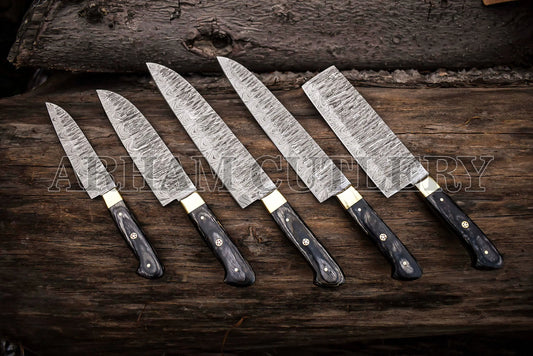
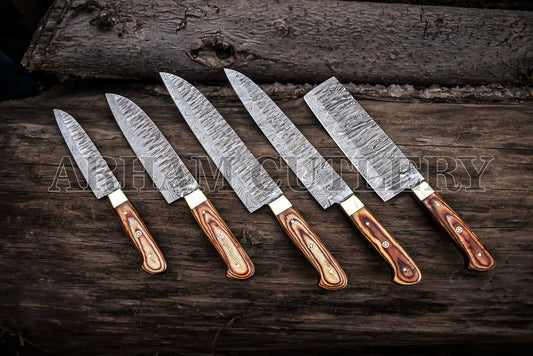
A good five-piece arrangement may include a chef knife, Santoku, utility blade, cleaver, and paring or specialty knife.
Arham Cutlery offers several 5-piece handmade Damascus chef knife sets designed around coordinated blade styles and matching handles.
Larger Kitchen Knife Sets
Larger sets can make sense for serious home cooks and professional chefs when every additional blade performs a useful task.
Before buying, look beyond the number of pieces.
Ask yourself whether each included knife adds something useful to your kitchen.
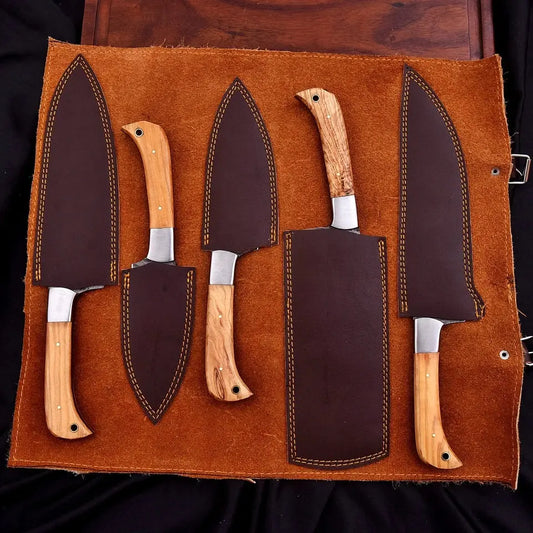
Damascus Knife Sets with Leather Rolls
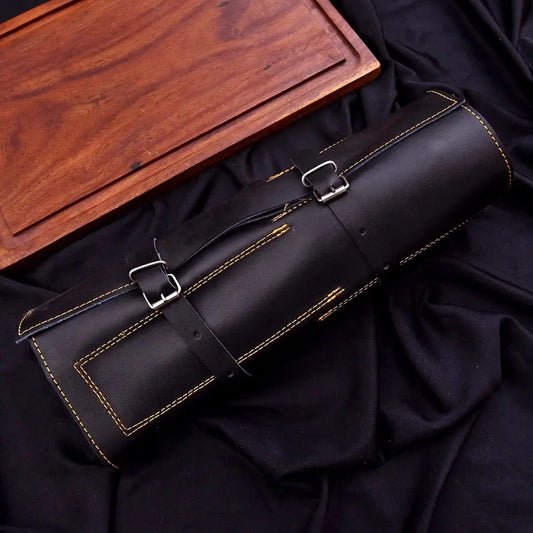
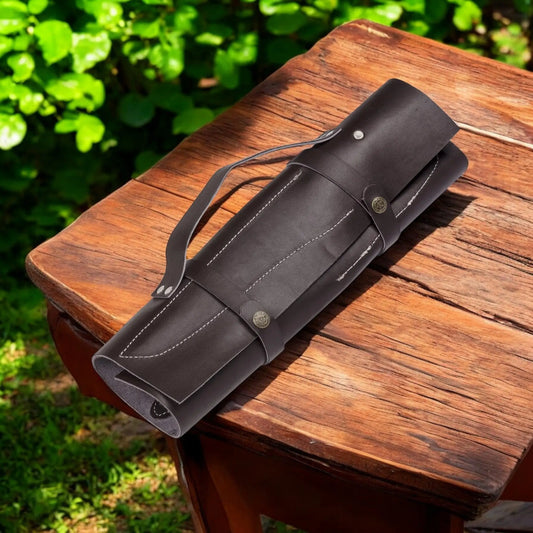
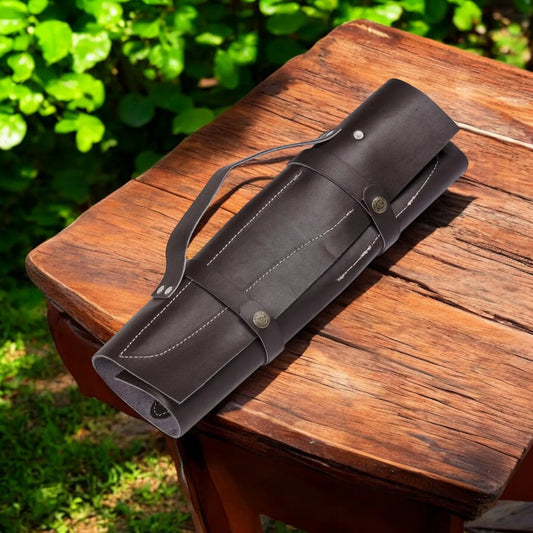
A leather roll can make a handmade knife set easier to store, organize, and transport.
This can be particularly useful for professional chefs, outdoor cooks, BBQ enthusiasts, culinary students, or buyers who prefer not to leave handmade blades loose inside a drawer.
Several Arham Cutlery Damascus knife sets include leather rolls or carrying cases as part of the complete package.
Handle Materials in Damascus Knife Sets
Handle material affects appearance, comfort, grip, weight, and the overall personality of the set.
Rosewood and Walnut Handles
Rosewood and walnut provide warm natural grain and pair especially well with patterned Damascus steel.
Because natural wood varies, individual knife handles can display slightly different grain and coloration.
Pakkawood Handles
Pakkawood provides another attractive option for kitchen knives, combining a wood-like appearance with a more consistent engineered structure.
It can be a practical choice for buyers who want traditional styling with a more uniform finish.
Bone Handles
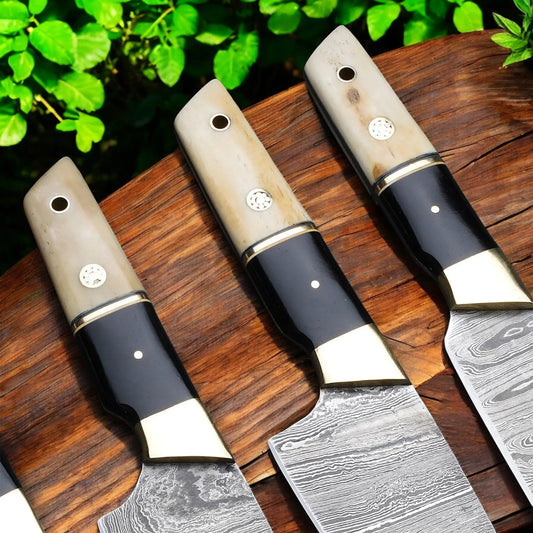
Bone handles give Damascus knives a distinctive handcrafted appearance and strong traditional character.
Natural variation is part of the appeal, especially for buyers who prefer knife sets that do not look mass-produced.
Resin Handles
A resin handle can introduce brighter colors, unique patterns, and a more contemporary appearance.
The best handle material ultimately depends on comfort, intended use, maintenance preference, and personal style.
Damascus Knife Set vs. Individual Kitchen Knives
Buying a complete chef knife set provides coordinated blade styles, handle materials, and storage.
Buying individual knives gives you the freedom to build your kitchen collection one blade at a time.
Neither approach is automatically better.
A home cook starting from scratch may prefer the convenience of a complete set, while an experienced cook may want to select every knife individually according to technique and personal preference.
Our how to choose a Damascus knife set guide provides additional help for buyers comparing these approaches.
Damascus vs. D2 Chef Knife Sets
Damascus and D2 kitchen knives offer different advantages and visual styles.
Damascus emphasizes visible patterning, handmade character, and distinctive presentation.
D2 may appeal more strongly to buyers interested in tool-steel wear resistance and edge retention.
The better choice depends on blade geometry, heat treatment, maintenance preference, handle design, and intended kitchen use.
For a deeper comparison, read our Damascus vs. D2 Chef Knife Sets guide.
How to Care for a Damascus Knife Set
Handmade Damascus knives deserve proper maintenance.
Hand wash each knife after use and dry it immediately. Avoid leaving Damascus blades soaking in water and do not assume handmade knives are dishwasher safe.
Depending on the steel used, a light coating of food-safe mineral oil can provide additional protection during longer-term storage.
Natural wood, bone, pakkawood, and resin handles should also be kept clean and protected from unnecessary prolonged moisture.
Honing vs. Sharpening Your Knife Set
A knife that feels slightly less sharp does not always require full sharpening.
Honing can help maintain or realign an edge, while sharpening removes steel to create a fresh cutting edge.
Understanding the difference between honing and sharpening can help extend the life of every knife in the set and reduce unnecessary sharpening.
Common Mistakes That Damage Kitchen Knives
Even a high-quality knife set can be damaged by poor maintenance habits.
Leaving knives wet, using glass or ceramic cutting boards, storing exposed edges loose in drawers, placing handmade knives in dishwashers, and using kitchen blades for inappropriate tasks can all shorten their working life.
Our guide to common mistakes that damage kitchen knives explains these problems in greater detail.
How to Store Damascus Knife Sets
Storage should protect the cutting edges while keeping the knives clean and dry.
Depending on the set and kitchen setup, suitable options may include a leather roll, knife block, magnetic strip, blade guards, or another purpose-built knife storage system.
Never store a wet Damascus blade for extended periods, especially inside leather.
Proper storage protects both the steel and the sharp cutting edge.
How to Choose the Right Damascus Knife Set
Start with the foods you prepare most often.
A home cook may need a chef’s knife, Santoku knife, utility blade, and paring knife.
Someone who frequently prepares meat or BBQ may appreciate a cleaver.
A baker may benefit from a bread knife.
A professional chef may prefer a larger combination with more specialized blades.
Then compare set size, blade profiles, handle material, blade length, construction, balance, storage system, and included accessories.
The best Damascus knife set is not necessarily the one with the most pieces.
It is the set where every knife has a clear reason to be in your kitchen.
Who Should Choose a Damascus Knife Set?
Damascus knife sets can suit home cooks, professional chefs, BBQ enthusiasts, collectors, culinary students, and gift buyers.
They are especially attractive to buyers who want practical kitchen versatility combined with the handcrafted appearance of patterned steel.
A coordinated Damascus steel knife set can also make a distinctive wedding, anniversary, housewarming, birthday, or culinary gift.
Why Arham Cutlery Builds Knife Sets Around Real Kitchen Use
At Arham Cutlery, a Damascus Knife Set should not simply be several attractive blades placed together.
Every knife should contribute something useful.
The chef’s knife should handle everyday preparation.
The Santoku knife should provide another versatile cutting option.
The paring knife should handle precision work.
Cleavers and specialty blades should earn their place by performing tasks the other knives cannot handle as efficiently.
That is the purpose of the Arham Complete Kitchen Set Standard.
Want to understand patterned steel, blade construction, and how to evaluate quality before choosing a set? Explore our Damascus Steel Knives Complete Buying Guide for practical tips on materials, authenticity, and knife selection.