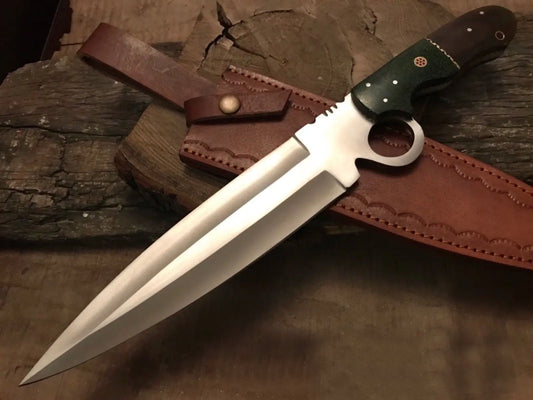
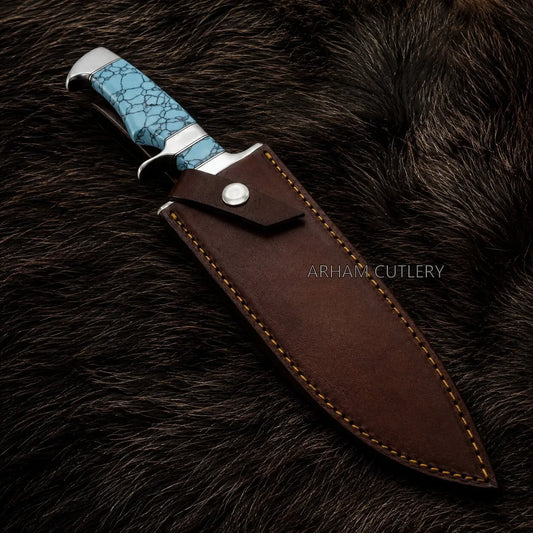
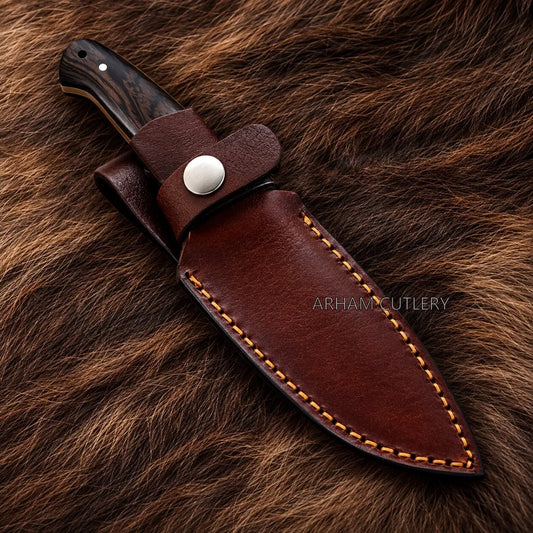
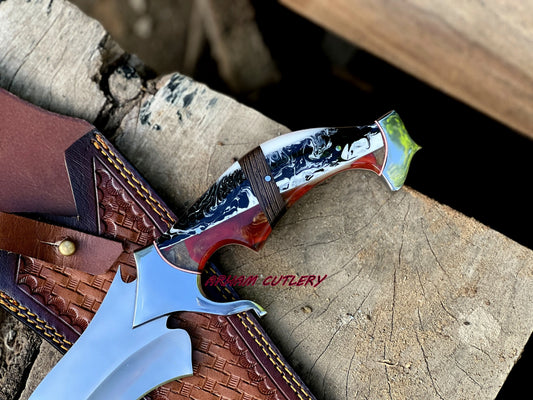
Collection: D2 Hunting Knives

Handmade D2 Hunting Knives for Field & Outdoor Use

Explore D2 Hunting Knives by Arham Cutlery, crafted for hunters, outdoor users, ranchers, and knife collectors who want dependable fixed-blade performance. D2 steel is a high-carbon, high-chromium tool steel valued for strong wear resistance, reliable edge retention, and better corrosion resistance than many simpler carbon steels because of its higher chromium content.

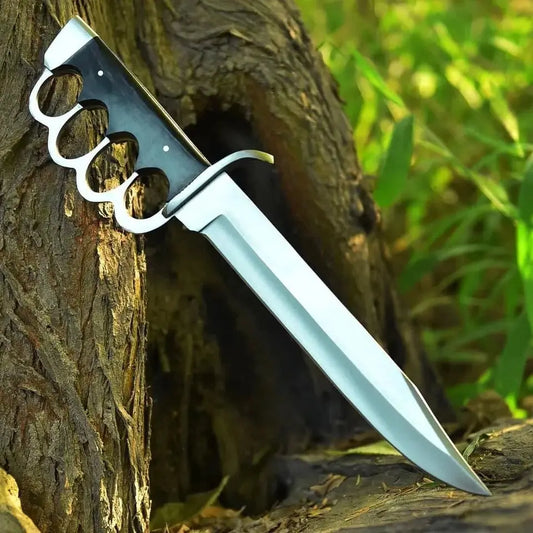
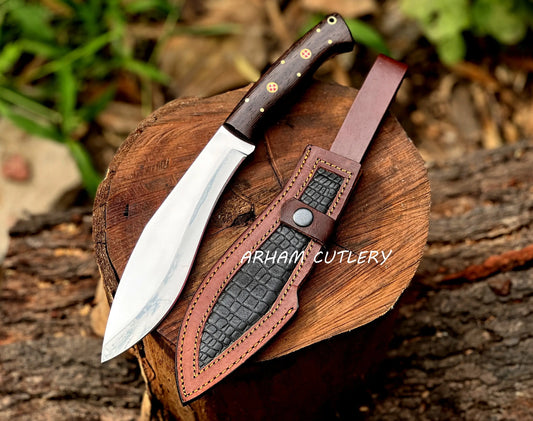
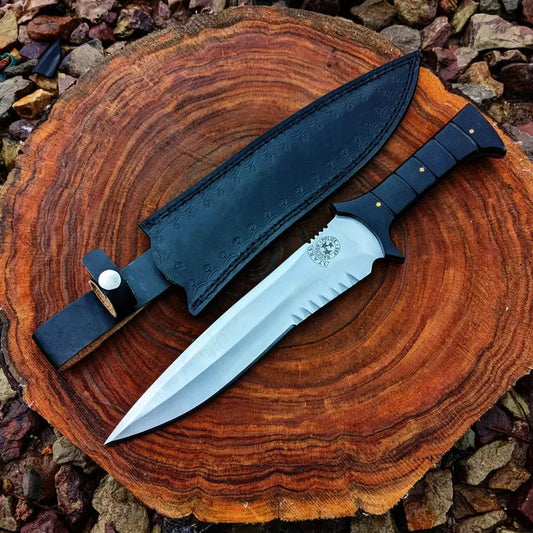
Our collection brings together hunting, skinning, Bowie, drop-point, gut-hook, and general field-use designs built around a durable D2 blade. Compare blade length, edge profile, tang construction, sheath style, and handle options such as wood, bone, horn, Micarta, or a G10 handle where available to choose a D2 hunting knife that fits your field, camping, and outdoor needs.

What Is a D2 Hunting Knife?

A D2 hunting knife is a fixed-blade hunting knife made from D2 tool steel, a high-carbon, high-chromium steel known for strong wear resistance, dependable edge retention, and useful durability for outdoor cutting tasks.

At Arham Cutlery, D2 Hunting Knives include different field-oriented designs rather than one single blade pattern. Depending on the model, hunters can choose from skinning knives, drop-point blades, gut-hook designs, Bowie-style hunters, and general-purpose fixed blades.

The right D2 hunting knife should combine good steel with useful blade geometry, a secure handle, practical construction, and a sheath suited to field carry.

The Arham D2 Field Edge Standard

A hunting knife should never be judged by the steel name alone.

At Arham Cutlery, we look at how D2 steel, edge geometry, blade profile, handle control, construction, balance, and sheath design work together. We call this the Arham D2 Field Edge Standard.

A good D2 blade should hold a dependable working edge, but it should also feel controlled in the hand and match the task it was designed to perform.

Edge Retention and Wear Resistance

D2 steel is especially popular because of its strong wear resistance and ability to maintain a useful cutting edge through repeated work.

This does not mean a D2 hunting knife never needs sharpening. Every working knife eventually requires maintenance. D2 simply appeals to hunters who want good edge retention and do not want to touch up the blade constantly during normal field use.

Corrosion Resistance

D2 has a higher chromium content than many simple carbon steels, giving it better corrosion resistance than traditional high-carbon blades.

It should still be cleaned and dried after use. Blood, moisture, dirt, humidity, and prolonged storage inside a damp sheath can affect the blade over time.

D2 Hunting Knife Blade Styles

Different hunting tasks benefit from different blade shapes.

D2 Skinning Knives

A skinning knife usually emphasizes blade control and useful belly rather than excessive length.

A compact D2 skinner can be a strong option for hunters who want precise cutting during game preparation. Buyers interested specifically in these blade shapes can also explore the Skinning Knives collection.

D2 Gut Hook Knives

A gut-hook design includes a specialized cutting hook near the spine of the blade.

Some hunters prefer this feature during field dressing, while others prefer the simplicity of a conventional hunting blade. Our Gut Hook Knives collection provides additional options for buyers who specifically want this design.

D2 Bowie Hunting Knives

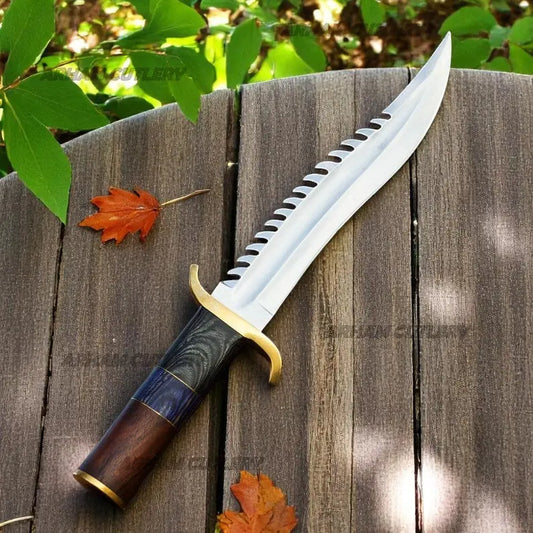
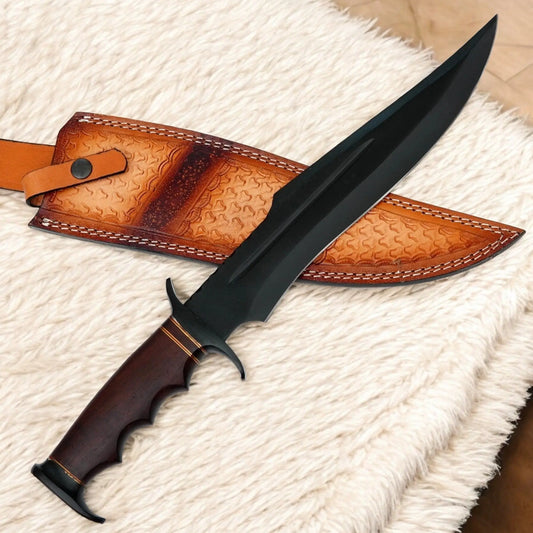
Bowie-style hunting knives provide more blade length and a larger overall fixed-blade format.

They can appeal to hunters and outdoor users who want a substantial field knife rather than a compact skinner. Buyers looking for larger designs can compare the Hunting Bowie Knives collection.

Drop-Point Hunting Knives

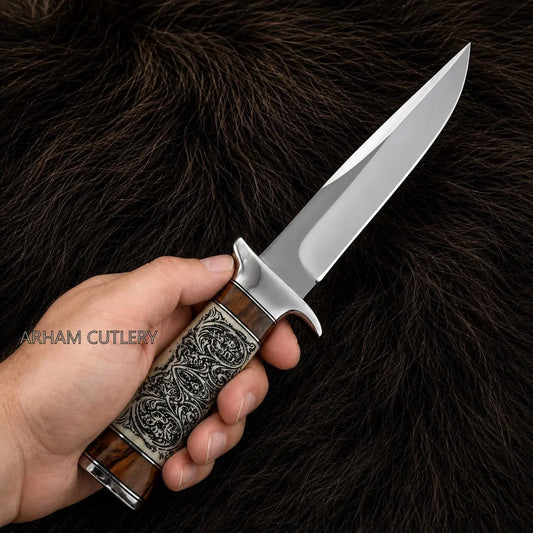
The drop-point profile is popular because it combines a strong tip with useful cutting belly.

For hunters who want one knife for a mixture of field tasks, a drop-point D2 blade can provide a practical balance between control and general cutting performance.

Choosing the Right Handle Material

The handle determines how securely the user can control the knife, especially in outdoor conditions.

Micarta Handles

Micarta offers durability, stability, and practical grip characteristics. It is a strong option for hunters who prefer a modern working handle with relatively simple maintenance.

G10 Handles

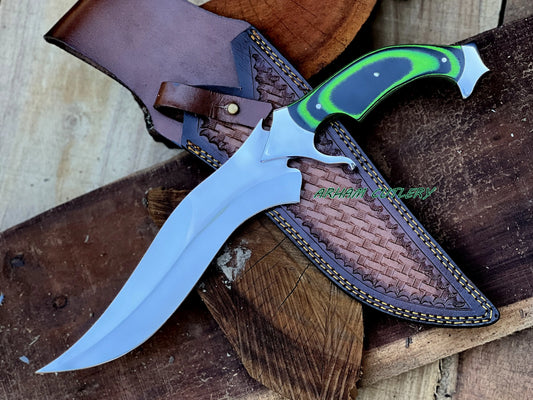
A G10 handle can provide another durable synthetic choice. Where available, G10 appeals to users who want environmental stability, texture, and a more modern outdoor-knife appearance.

Wood, Bone and Horn Handles

Natural materials such as wood, bone, and ram horn give handmade D2 hunting knives a more traditional character.

Wood offers grain and color variation, bone provides classic hunting-knife styling, and horn gives each handle a naturally distinctive appearance.

Natural handles should be protected from prolonged moisture and unnecessary exposure to extreme conditions.

D2 Hunting Knife vs. Damascus Hunting Knife

D2 and Damascus hunting knives appeal to different priorities.

A D2 hunting knife is often chosen for wear resistance, edge retention, and straightforward working performance.

A Damascus hunting knife may appeal more strongly to buyers who value visible steel patterns and handcrafted appearance.

Neither is automatically better. Blade geometry, heat treatment, construction, maintenance, and intended use matter more than appearance or steel name alone.

D2 Hunting Knife vs. Stainless Steel

Stainless hunting steels generally emphasize corrosion resistance and easier maintenance.

D2 places more emphasis on wear resistance and edge retention while still providing more corrosion resistance than many simple carbon steels.

Hunters who frequently work in very wet environments may prefer a more corrosion-resistant stainless steel. Buyers who prioritize working-edge performance and are willing to perform normal blade maintenance may prefer D2.

How to Choose a D2 Hunting Knife

Start with how you plan to use the knife.

For skinning, prioritize control and useful blade belly. For general hunting, a drop-point profile can provide versatility. Choose a gut-hook design only if that feature suits your field-dressing method. A larger Bowie-style blade may be better for users who want additional blade length and general outdoor utility.

Then compare blade length, blade thickness, edge profile, tang construction, handle material, grip shape, sheath style, balance, and overall weight.

The best D2 hunting knife is not necessarily the largest or hardest model. It is the knife whose complete design matches the work you actually plan to perform.

For buyers who want to compare D2 with additional steels and hunting profiles, the Handmade Hunting Knives collection offers a wider selection.

Sharpening and Maintaining D2 Steel

Because D2 has strong wear resistance, sharpening can require more patience than softer steels.

Use an appropriate sharpening system and maintain a consistent edge angle. Avoid removing unnecessary blade material simply to make the edge extremely thin.

After field use, clean the blade thoroughly, remove moisture and residue, and dry it before returning it to the sheath.

Keep leather sheaths dry during storage. A light protective coating may also be useful when the knife will be stored for an extended period.

Understanding the difference between honing and sharpening can help prevent unnecessary edge wear, while choosing the correct hunting knife sharpening angle can improve the balance between sharpness and durability.

D2 Hunting Knives for Field and Outdoor Use

A D2 hunting knife can serve more than one outdoor purpose.

Depending on its design, it may be useful for field dressing, skinning, camping, food preparation, cordage cutting, and general outdoor utility.

However, a hunting knife should always be used within the limits of its design. A fine hunting edge should not be treated like a pry bar or heavy chopping tool simply because D2 is a durable steel.

Who Should Choose a D2 Hunting Knife?

D2 hunting knives can appeal to hunters who value edge retention, outdoor users who want a durable fixed blade, and collectors interested in tool-steel construction.

Traditional buyers may prefer wood, bone, or horn handles, while others may choose Micarta or G10 for a more modern working setup.

The variety of blade profiles and handle materials means D2 can suit everything from compact skinning knives to larger outdoor fixed blades.

Why Arham Cutlery Builds D2 Knives Around Field Performance

At Arham Cutlery, putting “D2 Steel” in a product title is not enough to create a serious hunting knife.

The steel must work with the blade profile. The edge must suit the intended task. The handle must provide control. The construction must match the size of the knife, and the sheath must make the fixed blade practical to carry.

That is the purpose of the Arham D2 Field Edge Standard.

Whether you choose a compact D2 skinner, a gut-hook hunter, a drop-point field knife, or a larger Bowie-style blade, the goal remains the same: a dependable D2 hunting knife that holds a useful working edge, feels controlled in the hand, and earns its place in your field gear.

FAQs

What are the downsides of D2 steel?


D2 steel offers strong wear resistance and edge retention, but it can take more effort to sharpen than softer steels. It also still needs basic corrosion care, especially after exposure to moisture or blood.

Is D2 a high-end steel?


D2 is generally considered a proven performance-oriented tool steel rather than a modern premium “super steel.” Its strong wear resistance and edge retention still make it a respected choice for hunting and working knives.

Is D2 still good for a knife?


Yes. D2 remains a practical knife steel for users who value edge retention, wear resistance, and durability. Proper heat treatment, blade geometry, and maintenance matter just as much as the steel name.

How do I choose the best D2 hunting knife?


Choose according to your main use. Compare blade profile, length, edge geometry, handle comfort, tang construction, sheath style, and overall weight rather than judging the knife by D2 steel alone.

Is D2 steel good for hunting knives?


Yes. D2 can work very well in hunting knives because it offers strong edge retention and wear resistance. It is especially useful for hunters who want a dependable working edge and are comfortable with normal blade maintenance.