What Is a Kukri Knife?
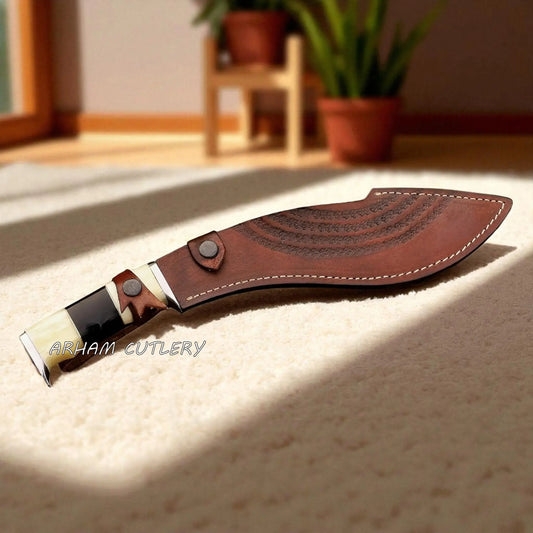
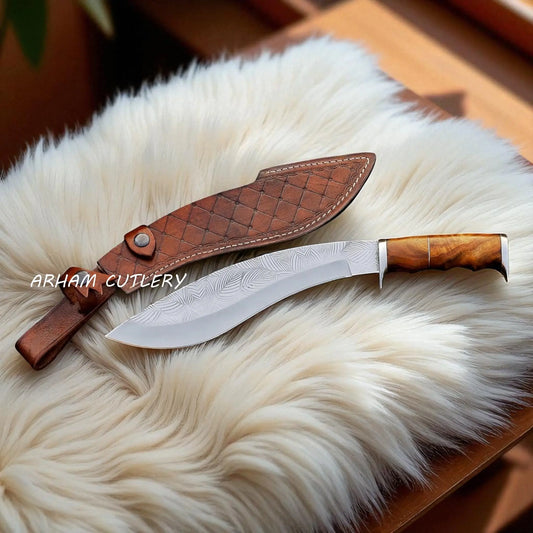
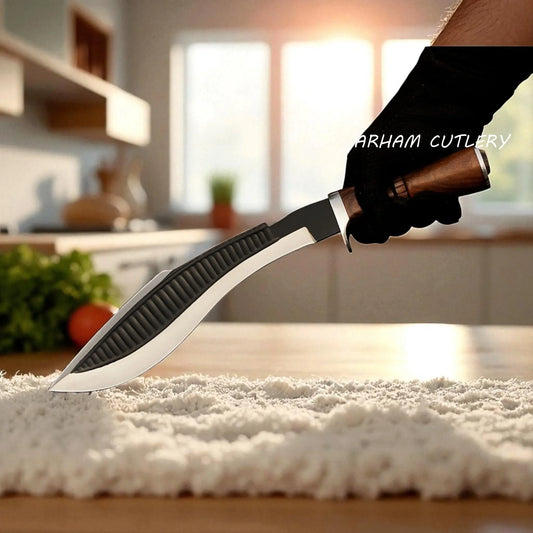
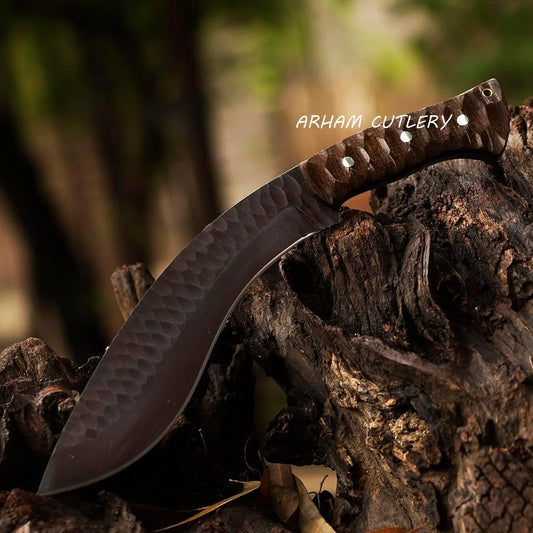
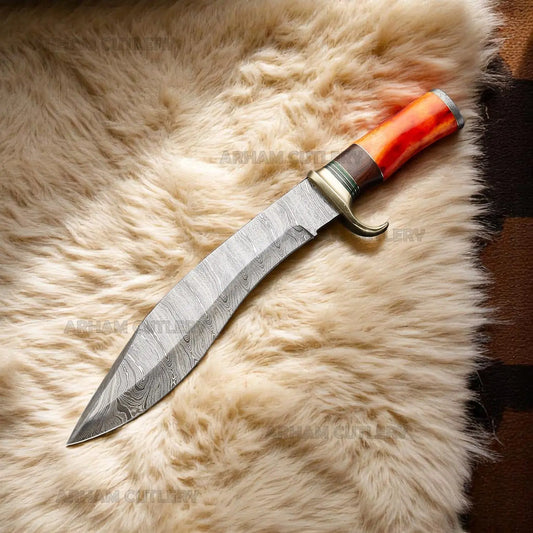
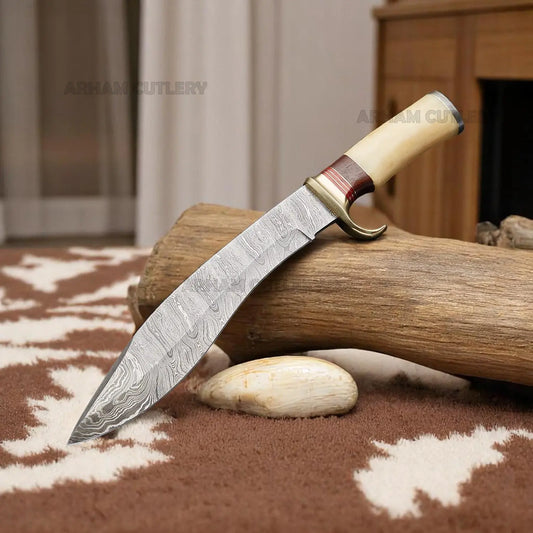
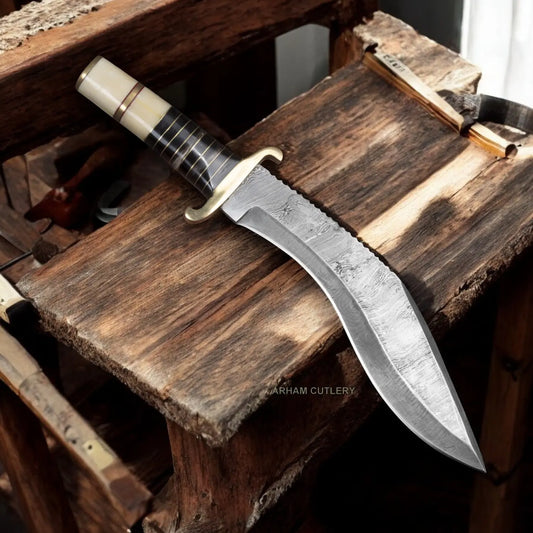
A kukri knife is recognized by its distinctive forward-curved blade, which gives it a very different profile from a conventional straight fixed blade. Modern kukri-style knives are used and collected in a range of forms, from traditional-inspired Gurkha designs to handmade hunting, survival, and outdoor fixed blades.
At Arham Cutlery, our Kukri Knives collection includes Damascus, D2, stainless, and carbon-steel models with wood, resin, rosewood, and other handle materials depending on the design.
For broader field-use options, explore our Handmade Hunting Knives collection, or compare larger fixed blades in the Hunting Bowie Knives collection.
The Arham Forward-Curve Standard
A kukri should not be judged only by the dramatic curve of the blade.
At Arham Cutlery, we consider blade geometry, steel, full tang construction, handle ergonomics, overall length, balance, sheath design, and intended outdoor use.
We call this the Arham Forward-Curve Standard.
The goal is simple: the curved profile, handle, steel, and overall proportions should work together instead of relying on shape alone.
What Makes a Gurkha Kukri Knife Distinctive?
The Gurkha kukri knife is strongly associated with the traditional Nepalese kukri profile, recognized by its forward-curved blade and distinctive balance.
Modern handmade kukri knives can vary considerably in size, steel, handle material, tang construction, and finish.
The 18-Inch Handmade Damascus Gurkha Kukri Bowie Knife is one example of a larger full-tang Damascus interpretation built around hunting and survival styling.
When choosing a Gurkha-inspired kukri, compare the actual dimensions and construction rather than assuming every curved blade follows the same proportions.
Damascus Kukri Knives
Damascus kukri knives combine the forward-curved profile with patterned steel.
This gives the blade strong visual character and can make each piece especially appealing to collectors who appreciate handcrafted variation.
The Handmade Damascus Kukri Knife with Resin Handle combines layered steel with a full-tang hunting and survival profile.
Another option is the Handmade Damascus Full Tang Hunting & Survival Kukri Knife, which focuses on a substantial fixed-blade format.
For more patterned outdoor blades beyond kukris, explore the Damascus Hunting Knives collection.
D2 Steel Kukri Knives
D2 steel can appeal to buyers who prioritize wear resistance and edge retention.
For a large fixed blade, steel should still be considered together with heat treatment, blade thickness, grind, and balance.
The 15-Inch Handmade D2 Steel Kukri Survival Knife combines D2 steel, full-tang construction, a rosewood handle, and a leather sheath.
Buyers interested in more D2 field blades can also compare the D2 Hunting Knives collection.
Full Tang Construction
Many buyers look for full tang construction in a substantial outdoor knife.
A full tang generally means the blade steel continues through the handle beneath the scales.
This can contribute to a solid fixed-blade structure, but it should still be evaluated together with handle construction, blade thickness, balance, and overall workmanship.
The Handmade Full Tang Damascus Gurkha Kukri Knife is one example where full-tang construction is part of the product specification.
Why Blade Curve Matters
The forward curve is the defining visual feature of a kukri.
Compared with a straight hunting knife, the curved profile moves more of the blade mass forward and creates a different cutting feel.
This can make kukri-style knives appealing for outdoor users who prefer a broader chopping-oriented profile.
Blade curvature should still be considered alongside total weight, blade length, thickness, and handle shape.
A heavily curved blade with poor balance may be less comfortable than a more moderate design that fits the user's grip and intended task.
Kukri Knife vs. Bowie Knife
A kukri and a Bowie are both substantial fixed blades, but their profiles are very different.
A Bowie generally uses a straighter blade with a pronounced point and guard-oriented design.
A kukri curves forward and usually places more visual and physical emphasis toward the front of the blade.
Buyers who prefer traditional large straight fixed blades can compare the Hunting Bowie Knives collection.
The better choice depends on your preferred geometry, balance, carry style, and outdoor use.
Kukri Knife vs. Tracker Knife
Tracker knives and kukris can both appeal to bushcraft and survival-oriented users, but they achieve versatility differently.
A tracker usually uses several working areas along a broad blade.
A kukri relies more heavily on its forward-curved profile and weight distribution.
If you prefer a multi-section survival blade, explore the Tracker Knives collection.
If you prefer a more pronounced forward curve, a kukri may be the stronger fit.
Hand-Forged Kukri Knives
A hand-forged kukri can show hammer texture, handcrafted finishing, or variations that make it feel different from a factory-produced blade.
Forging, however, is only one part of the knife.
Buyers should still compare steel type, heat treatment, grind, blade thickness, tang construction, handle assembly, and overall balance.
A handmade appearance should support the function of the knife rather than replace technical specifications.
Handle Materials and Modern Ergonomics
Traditional styling does not mean a kukri handle has to feel outdated.
Modern handmade kukri designs can use rosewood, resin, wood, bone, horn, and composite materials depending on the model.
Modern ergonomics means paying attention to handle contour, grip security, thickness, finger position, and how the handle works with the forward weight of the blade.
A comfortable handle can make a large curved knife feel more manageable during controlled use.
Rosewood Kukri Handles
Rosewood is a natural match for traditional fixed blades.
Its warm grain and darker color can pair well with Damascus, D2, stainless, or carbon-steel blades.
The 15-inch D2 kukri in the collection uses a rosewood handle, giving buyers a more classic handle option alongside modern resin designs.
Natural wood should be kept dry and protected from prolonged moisture.
Resin Handle Kukri Knives
Resin handles can create more distinctive colors and patterns while offering a more modern appearance than traditional wood.
The Handmade Damascus Kukri Knife with Resin Handle is one example of this style.
When comparing resin with wood, focus on grip shape and comfort as much as appearance.
The best handle is the one that fits the hand securely and balances the blade well.
Leather Sheaths
Many Kukri Knives include a leather sheath depending on the product.
Because kukri blades are often large and curved, the sheath plays an important role in safe storage and carry.
Check the individual listing for sheath shape, retention, belt attachment, and coverage.
Avoid storing a wet blade inside leather for long periods because moisture can remain against the steel.
Sharpening Stone Accessories
Some kukri packages may include a sharpening stone or other accessory where specified.
Do not assume every model includes the same extras.
Always check the product page to see whether the knife includes only the sheath or additional maintenance accessories.
A sharpening stone should also match the edge geometry and steel rather than being used aggressively without considering the original bevel.
Kukri Knives for Hunting
A kukri can appeal to hunters who prefer a larger fixed blade with a forward-curved profile.
However, it may not replace smaller, more specialized knives for every field task.
For precision cutting, skinning, or detailed work, a more compact hunting knife may be easier to control.
For a broader comparison, explore the Handmade Hunting Knives collection.
Kukri Knives for Survival and Bushcraft
The size and forward-weighted design of many kukris make them especially interesting to survival and bushcraft users.
When choosing for this purpose, consider:
blade length, overall weight, steel, edge geometry, full tang construction, handle grip, sheath, and portability.
The biggest or heaviest kukri is not automatically the best survival knife.
The knife should fit the scale of the tasks and the rest of the user's outdoor gear.
Stainless and Carbon Steel Kukris
Not every kukri uses Damascus or D2.
The current collection also includes stainless and carbon-steel full-tang fixed blades.
Stainless designs may appeal to buyers who want easier corrosion care.
Carbon steel can provide a more traditional working-blade character but generally benefits from careful drying and maintenance.
The right steel depends on the environment, intended use, and maintenance preference.
Kukri Knives for Collectors
Kukris also have strong collector appeal because the shape is immediately recognizable.
Damascus patterning, Gurkha-inspired styling, brass fittings, rosewood, resin, handmade leatherwork, and larger fixed-blade proportions can all create visually distinctive pieces.
Collectors may prioritize pattern and craftsmanship.
Outdoor users may prioritize steel, balance, grip, and dimensions.
Both priorities are valid, but they lead to different buying decisions.
How to Choose the Right Kukri Knife
Start with the role the knife needs to fill.
For hunting, compare blade control, steel, handle grip, and overall size.
For bushcraft or survival, examine full tang construction, balance, weight, edge geometry, and carry.
For collecting, Damascus pattern, natural materials, and traditional-inspired details may matter more.
Then compare:
blade length, overall length, steel, forward curve, handle material, tang construction, balance, sheath, and included accessories.
Do not choose a kukri simply because it has the most dramatic curve.
Choose the design whose proportions and materials make sense for your actual needs.
Why Arham Cutlery Offers Different Kukri Styles
One buyer may want a Gurkha kukri knife with Damascus steel.
Another may prefer D2 and rosewood.
A collector may choose a resin-handled custom knife, while an outdoor user may focus on a hand-forged, full tang design with practical modern ergonomics.