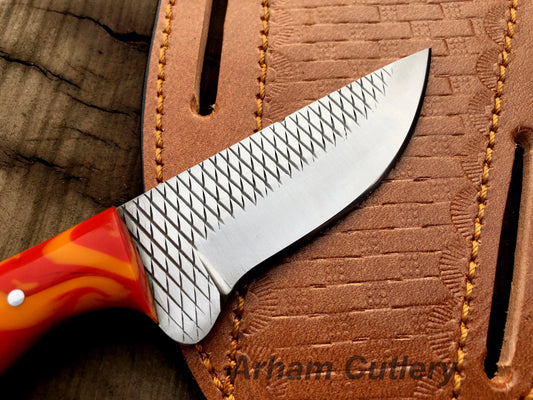
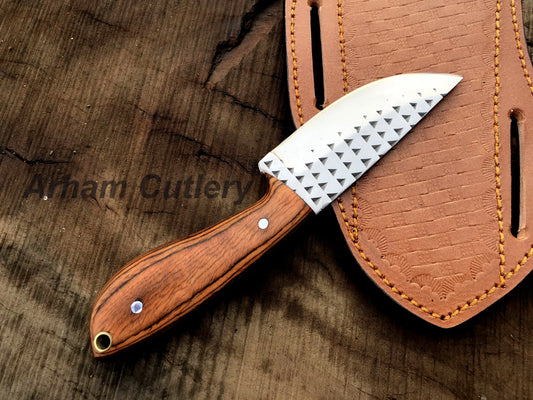
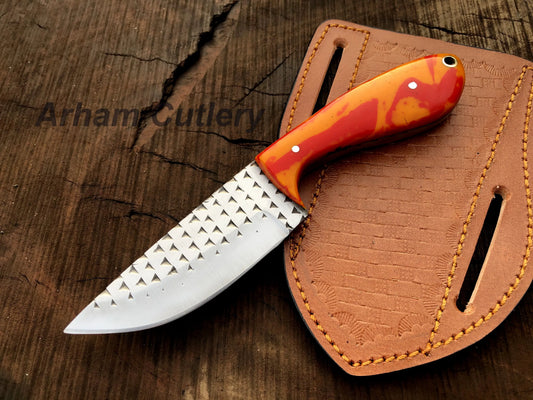
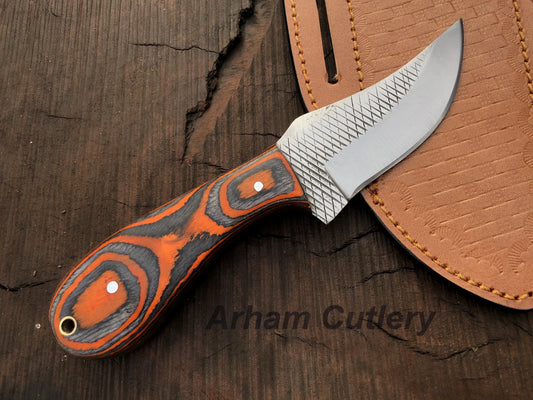
What Is a Farrier Rasp File Knife?
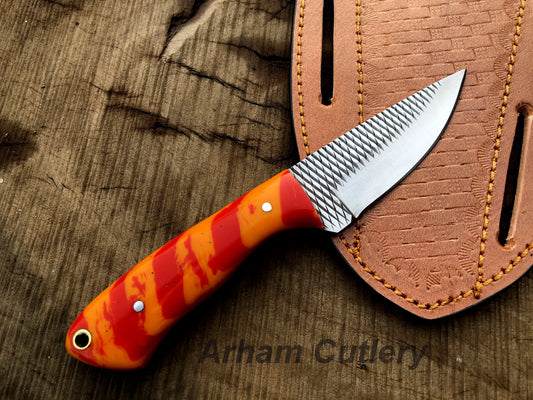
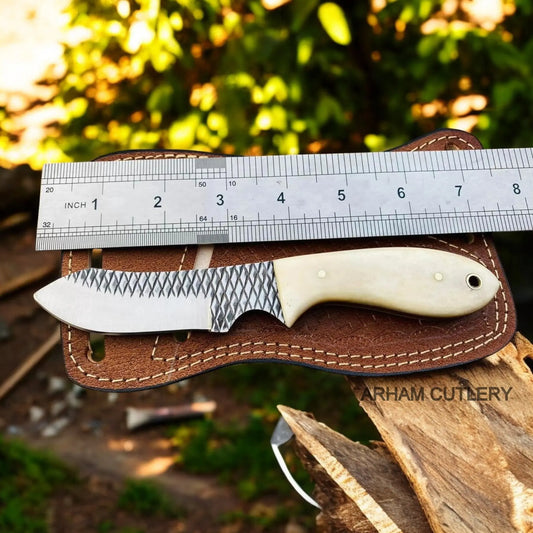
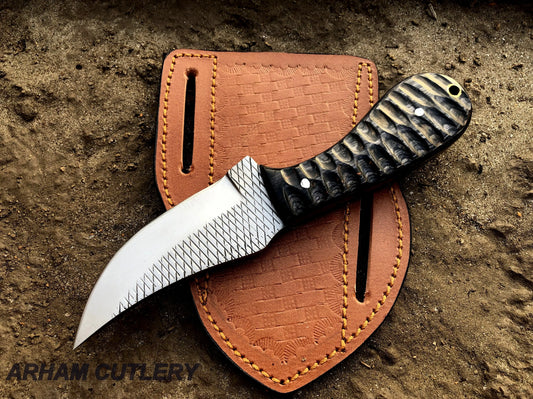
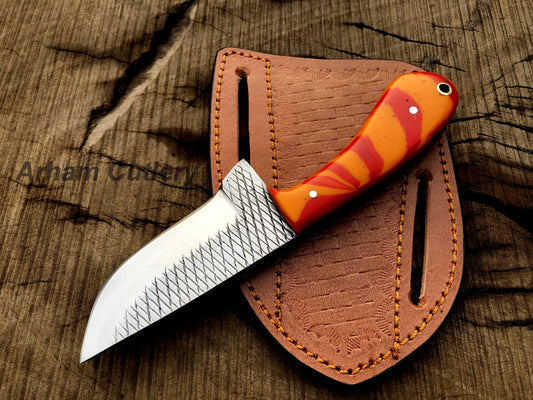
A farrier rasp file knife is a handmade knife inspired by or crafted from the heavy steel rasps traditionally associated with hoof care and farrier work. These knives are recognized for their distinctive textured appearance, rugged Western character, and connection to ranch and horse-working traditions.
At Arham Cutlery, our Farrier Rasp File Knives collection includes hunting knives, skinners, compact fixed blades, ranch knives, belt knives, and collector-oriented designs in a variety of handle materials and blade profiles.
Some designs preserve visible rasp-style texture on the blade, helping each knife stand apart from a conventional polished fixed blade.
The Arham Rasp Heritage Standard
A rasp-style knife should offer more than a rustic appearance.
At Arham Cutlery, we consider blade profile, steel construction, handle comfort, balance, carry method, craftsmanship, and intended use when evaluating a rasp knife.
We call this the Arham Rasp Heritage Standard.
The idea is simple: preserve the rugged visual character associated with rasp-file knives while creating a finished knife that feels purposeful in the hand and suits the role it was designed for.
Why Are Rasp File Knives So Distinctive?
The first thing many buyers notice is the blade surface.
Traditional rasp tools use a coarse textured face, and many handmade rasp knives retain or recreate some of that visual character. Instead of looking like a completely smooth factory blade, the knife may show textured sections, forging marks, or patterned surfaces that give it a more individual appearance.
This makes horse rasp knives especially attractive to collectors, ranch enthusiasts, and buyers who prefer handmade Western-style gear.
Because individual designs, materials, and finishing methods vary, always check the specific product photographs and specifications before choosing.
Farrier Rasp Knives for Ranch Use
Rasp knives naturally fit the visual language of ranch and Western equipment.
Natural handle materials, textured blades, leather sheaths, and compact fixed-blade construction can pair well with traditional ranch gear.
Buyers looking specifically for Western-inspired designs can also compare the Cowboy Knives collection, where similar handle materials and belt-carry styles are available.
The Belt Knives collection is another useful comparison for buyers whose priority is convenient sheath-based carry.
Rasp File Hunting Knives
Some rasp-style knives use blade shapes suited to general hunting and outdoor cutting.
Rather than choosing based only on the rasp texture, compare the actual blade geometry. A broad belly may suit controlled slicing and field tasks, while a more pointed profile may offer greater tip control.
If hunting is your main priority, compare these designs with the Handmade Hunting Knives collection before making your choice.
The right hunting knife depends on blade length, profile, handle security, steel, edge geometry, and the type of field work you expect to perform.
Skinning designs usually emphasize a curved working edge and good control.
A compact rasp-file skinner can combine the rustic appearance of a textured blade with a shape intended for controlled slicing.
Arham Cutlery currently offers rasp-style skinner designs with natural handle materials such as deer bone and stag horn among other options.
Buyers focused specifically on this task can also explore the Skinning Knives collection.
Compact Rasp Knives for Everyday Carry
Not every rasp knife needs to be large.
Compact fixed blades can work well for buyers who want a smaller handmade knife that is easier to carry on a belt or keep with outdoor gear.
The collection includes compact rasp-file and fixed-blade EDC designs, including models paired with leather sheaths.
When choosing a compact knife, compare overall length, blade length, handle size, sheath design, and weight rather than assuming the smallest knife will automatically be the most comfortable.
Deer Bone and Stag Horn Handles
Natural handle materials complement the rugged appearance of rasp steel.
Deer Bone
Deer bone handles can provide a traditional Western appearance and natural color variation. Because bone is a natural material, no two handles will look completely identical.
Stag Horn
Stag horn handles provide texture, visual character, and a classic hunting-knife appearance.
Arham Cutlery currently carries multiple rasp-file designs using stag-horn-style handles, including skinner and fixed-blade profiles.
Natural materials should be kept clean and dry and protected from prolonged exposure to moisture.
Resin and Pine Cone Handles
Rasp file knives do not have to use only traditional bone or horn.
Resin handles can introduce brighter colors and distinctive patterns, creating a more modern contrast with the rugged blade surface.
Pine cone and resin combinations are particularly eye-catching because the natural material is suspended within the resin, creating variation from one handle to another.
The live collection includes pine-cone and resin-handled rasp designs alongside more traditional materials.
Wood and Horn Handle Options
Wood, sheep horn, buffalo horn, and other natural materials can also change the personality of a rasp knife.
Wood provides warm grain and traditional styling.
Horn can add natural texture and color variation.
When choosing a handle, appearance matters, but grip shape, handle length, comfort, and intended environment should matter just as much.
A beautiful handle that does not fit your hand well may not be the best working choice.
Why Leather Sheaths Matter
Many fixed-blade rasp knives are paired with a leather sheath.
A sheath protects the cutting edge during carry and storage while giving the knife a traditional Western presentation.
When comparing models, look at the actual sheath configuration shown on the product page. Belt loops, pancake-style carry, horizontal carry, and other arrangements can feel very different in everyday use.
Do not store a wet blade inside leather for long periods, because leather can retain moisture against the steel.
Choosing the Right Blade Size
There is no single ideal size for every rasp file knife.
A compact knife can offer good control and easy carry.
A medium-sized hunting or ranch knife can provide more working edge without becoming excessively bulky.
Larger designs may appeal to buyers who want greater blade presence or a more substantial outdoor knife.
Before ordering, compare:
overall length, blade length, handle length, blade thickness, weight where listed, and sheath dimensions.
These measurements tell you much more about how a knife will feel than product photographs alone.
Rasp Knife vs. Conventional Hunting Knife
A rasp knife and a conventional hunting knife can sometimes perform similar roles, but their design priorities may differ.
A conventional hunting knife may emphasize a clean finished blade and purpose-specific field geometry.
A rasp-style knife often adds visible texture, Western character, and a handcrafted aesthetic to the same general fixed-blade format.
Neither is automatically better.
Choose according to blade geometry, steel, handle comfort, construction, carry system, and intended use, not simply the surface appearance.
Are All Rasp File Knives Made From the Same Steel?
No.
The phrase “rasp file knife” describes a style and construction tradition, but individual knives can use different steels or different approaches to rasp-style blade construction.
For example, some models in the Arham Cutlery collection identify J2 stainless steel rasp-style blades, while other listings describe rasp steel more generally.
That is why buyers should check the steel specification on the individual product page instead of assuming every rasp knife has identical metallurgy.
This distinction is important because edge retention, corrosion resistance, sharpening behavior, and maintenance can vary with steel type and heat treatment.
How to Care for a Farrier Rasp File Knife
After use, wipe the blade clean and dry it thoroughly.
If the steel is susceptible to corrosion, a light protective coating of suitable knife oil can help during storage.
Keep bone, horn, and wood handles away from prolonged moisture and excessive heat.
If the knife includes a leather sheath, allow both the blade and sheath to dry before long-term storage.
When the edge begins losing performance, understanding the difference between honing and sharpening can help prevent unnecessary removal of blade material.
Choosing a Rasp Knife for Collection Use
Not every buyer is looking for a working hunting knife.
Collectors may prioritize blade texture, unusual handle material, handcrafted details, Western styling, and how distinctive one knife looks compared with another.
Pine-cone resin, deer bone, stag horn, buffalo horn, sheep horn, snake wood, and other materials can give individual rasp knives very different personalities.
For collectors, the best choice may simply be the knife whose combination of blade texture, handle material, profile, and sheath feels most distinctive.
How to Choose the Right Farrier Rasp File Knife
Start with the role you want the knife to perform.
For hunting, focus on blade profile, grip, steel, and field control.
For skinning, consider a curved cutting edge and manageable size.
For ranch or belt carry, look closely at overall dimensions and sheath configuration.
For collection use, blade texture and handle material may become more important.
Then compare blade shape, steel type, overall length, handle material, construction, sheath style, and intended use.
A rasp knife should not be chosen simply because the blade looks rugged.
The best choice is one whose design matches what you actually want from the knife.
Why Arham Cutlery Offers Different Rasp Knife Styles
A farrier rasp file knife does not have to follow one fixed design.
One buyer may prefer a compact stag-horn skinner.
Another may want a deer-bone ranch knife.
Another may prefer a colorful pine-cone resin handle or a traditional Western belt knife.
That variety is the purpose of the Arham Rasp Heritage Standard: combining the unmistakable character of rasp-inspired blades with different profiles, handles, sizes, and carry styles so buyers can choose a knife around their own needs rather than one generic design.